Rolling, sitting, crawling, standing, walking
Every time your baby learns something new, sleep falls apart for a fortnight. That is not a coincidence and it is not avoidable - but the length of the fortnight is partly in your hands.
4 min read
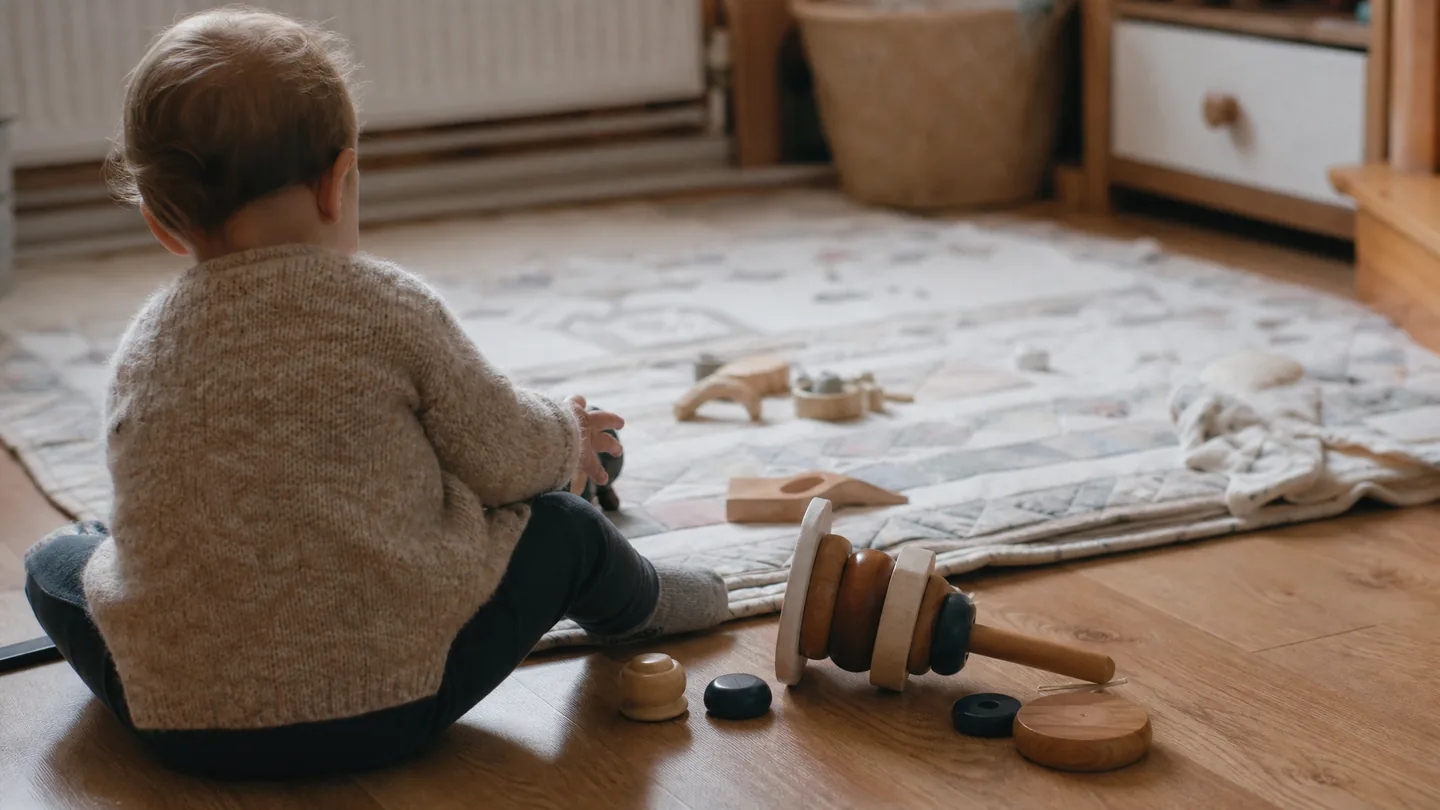
Sleep is when the brain consolidates what it practised during the day, and for motor skills that consolidation is not purely mental. Newly acquired movements get rehearsed during light sleep and at cycle boundaries, which is why a baby who learned to roll on Tuesday spends Wednesday night rolling.
The rehearsal is doing real work. It is part of how the skill becomes automatic, and a baby who is prevented from doing it simply takes longer to master the movement. The practical response is to give the rehearsal somewhere better to happen.
What each skill does
Rolling, around 4–6 months. They roll onto their front at night and object to being there. Once a baby can roll both ways reliably, it is safe to leave them - and it is time to stop swaddling, which becomes dangerous the moment rolling starts.
Sitting, around 6–8 months. They sit up in the cot and cannot get back down. Practise lowering from sitting during the day.
Crawling, around 7–10 months. Movement across the cot, ending up in a corner, waking confused. Give them floor space and hours of it.
Pulling to stand, around 8–11 months. The worst of the set, because standing arrives weeks before sitting back down does. This is the one that needs deliberate practice at getting down.
Walking, around 10–15 months. Broad excitement, difficulty switching off, and often a nap strike. Long walks and lots of practice.
How to shorten it
Practise the specific skill, deliberately, several times a day - and practise the reverse of it, which is the part everyone forgets. Getting down from standing, lying down from sitting. A baby who can undo the movement has far less to be stuck about at two in the morning.
Then keep the response at night dull. Lie them down, say nothing much, leave. If they get straight back up, do it once or twice more and then let them work at it. Turning it into an event guarantees repeat performances.
The night-time practice is the skill being learned. Give it more daylight and it needs less darkness.
Cot safety keeps changing
Each skill changes what the cot needs. Rolling means no swaddle. Sitting and pulling up mean the mattress goes to its lowest setting, and nothing stays in the cot that can be climbed on. Nothing near the cot should be reachable - cords, blind pulls, shelves.
A sleeping bag is useful through all of this: it permits standing, makes climbing harder, and removes the loose-bedding question.
What a leap fortnight should look like
Practically: an hour or more of dedicated floor time a day for the new skill, the schedule completely unchanged, bedtime brought forward by fifteen or twenty minutes to offset the lost night sleep, and a very dull response to night-time practising.
That is the whole protocol and it is deliberately small. The reason not to do more is that anything you add during the fortnight has to be removed afterwards. Extra comfort in the moment is free; a reintroduced feed, a return to rocking, or a parent sleeping on the floor is a loan against a quieter month.
Two skills at once
They frequently overlap, and the overlapping months are the hardest. Crawling and pulling to stand often arrive within weeks of each other. Walking and first words cluster around a year. When two are running, the disruption lasts longer and improvement is harder to see because one settles while the other is still going.
The response does not change - daytime practice, steady schedule, earlier bedtime, dull responses at night - but the timescale does. Assume four to six weeks rather than two, and judge on a fortnight rather than a week. A leap that seems to be dragging on is usually two leaps in sequence.
When to stop troubleshooting
Loss of a skill your baby previously had, a large delay against the usual range, marked asymmetry - always rolling or reaching to one side - or disruption alongside fever or pain, all warrant a conversation with your health visitor or GP.
Want this worked out for your baby instead?
The quiz takes three minutes and asks about your nights, not just their age.
Take the 3-min quiz →General guidance, not medical advice. Your paediatrician's advice takes precedence.