Bedtime that takes an hour
Bedtime has turned into a marathon and you are reading this from the nursery floor. The cause is almost never your baby’s character. It is almost always the last wake window, and it can be wrong in two opposite directions.
4 min read
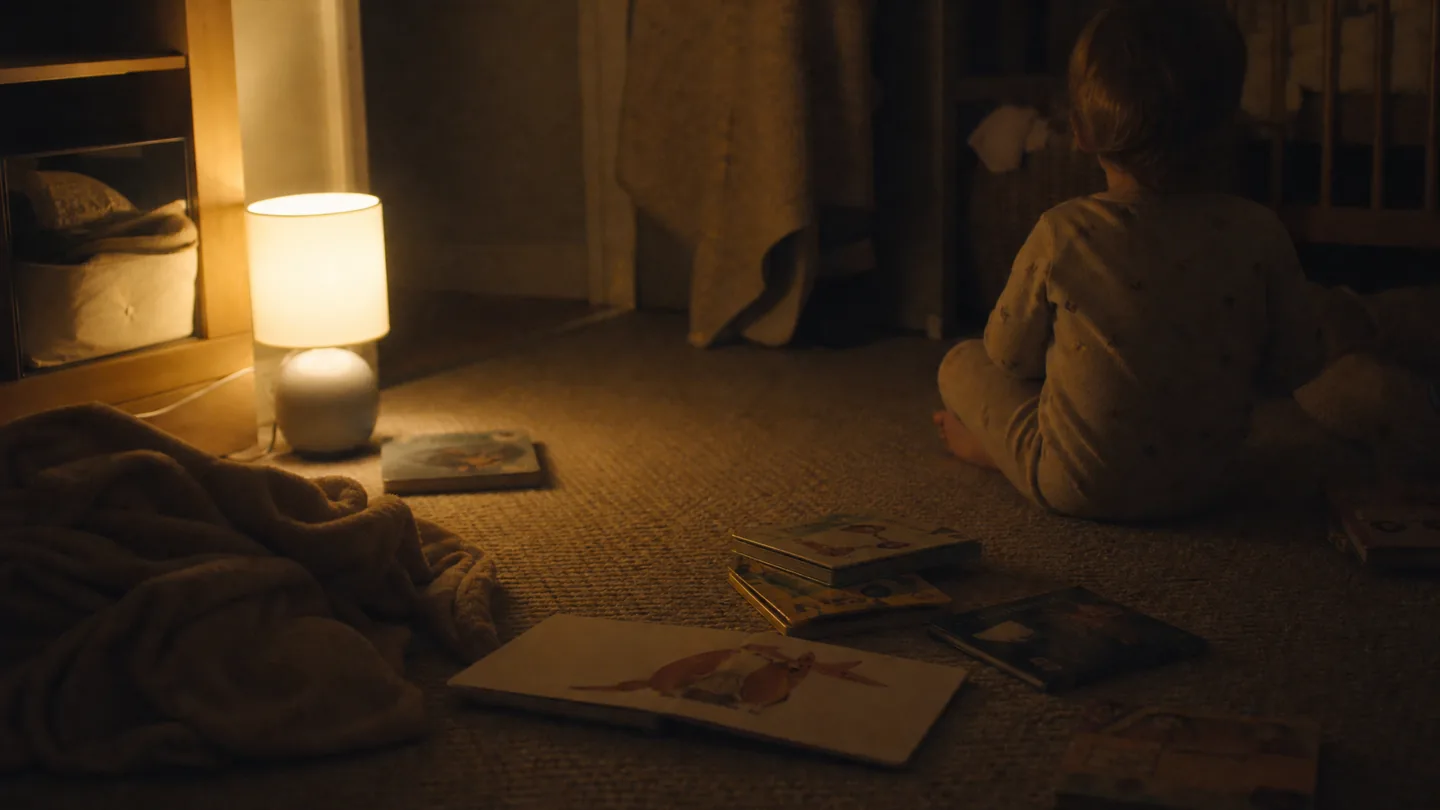
A bedtime that takes an hour is a bedtime that started at the wrong moment. Put a baby down before enough pressure has built and they will lie there, chat, kick, stand up, and eventually get cross about being in a cot with nothing to do. Put them down after the window has run too long and they will be wired, hard to hold, and will fight sleep with an energy that makes no sense given how tired they obviously are.
From the doorway these look almost identical: a baby who won’t go to sleep. From inside the room they are quite different, and telling them apart is most of the work.
How to tell which one you have
Watch the first ten minutes. Undertired usually looks calm and busy - babbling, rolling, playing with the sleeping bag, cheerful about it. Overtired usually looks agitated from the moment you put them down, with crying that starts fast and hard rather than building.
Look at how they were in the last half hour. A second wind - sudden giddiness, hysterical laughing, frantic crawling - is the classic sign the window ran long. Calm, content and content to keep playing usually means it hasn’t run long enough.
Check what happens forty minutes later. Undertired bedtimes often end in a long stretch once they finally go down. Overtired bedtimes often end with a wake soon after, because the sleep that follows is fragile.
Count from the end of the last nap, not from dinner. The window that matters starts when they woke up, not when the evening routine started.
Move it fifteen minutes
Whichever direction you have decided on, move the last wake window by fifteen minutes and hold it for four nights. Fifteen minutes sounds too small to matter. It is usually the entire fix, because you are not looking for a big change - you are looking for the narrow band where enough pressure has built and not so much that the system has tipped.
Keep the routine itself exactly the same while you do this. Same order, same rooms, same lighting, same length. If you shorten the routine on the nights it is going badly, you have changed two things at once and you will not know which one moved the needle.
An hour at bedtime is a timing problem wearing the costume of a behaviour problem.
When it really is the association
If you have found the right window and bedtime is still long, look at what has to be true for your baby to fall asleep. If the answer is being held, fed or rocked to the point of sleep, then bedtime is not long because they cannot sleep - it is long because the conditions for sleep take an hour to deliver.
That is a different piece of work, and it is worth doing separately and slowly, after the timing is right. Trying to change the settling method while the window is also wrong is the fastest way to conclude that nothing works.
Shortening the routine
Bedtime routines expand quietly. What started as bath, pyjamas, one book and a song becomes bath, pyjamas, four books, two songs, a tour of the room to say goodnight to things, and a negotiation. By the time it takes an hour, a fair portion of that hour is keeping your baby awake rather than settling them.
Thirty to forty minutes is plenty from bath to cot. Write down what you actually do for three nights and you will usually find two or three steps that crept in and are doing nothing. Cut those, keep the order of what remains identical, and do not shorten it further on the bad nights - a routine that changes length depending on how it is going teaches that resistance shortens it.
The last hour before the routine starts
What happens before bedtime shapes it as much as the routine does. A boisterous half hour, bright overhead lighting, a screen, or a visitor arriving at six all leave a baby wound up in a way that thirty minutes of bath and books cannot undo.
Drop the lights for the last hour, keep the activity calm and floor-based, and avoid anything new or exciting. This costs nothing and is frequently worth more than any adjustment to the routine itself - particularly for the babies who seem to get a second wind at exactly the wrong moment.
When to stop troubleshooting
Bedtime that is long and genuinely distressed every night despite correct timing, arching or crying that looks like pain rather than protest, or a baby who cannot settle lying flat, is worth raising with your health visitor or GP. So is a bedtime battle that appears suddenly in a child who previously went down easily and stays that way for weeks.
Want this worked out for your baby instead?
The quiz takes three minutes and asks about your nights, not just their age.
Take the 3-min quiz →General guidance, not medical advice. Your paediatrician's advice takes precedence.