Dream feeds: who they help and who they don’t
A dream feed is a feed given to a sleeping baby before you go to bed, in the hope of buying a longer stretch afterwards. It works for some families in a fairly narrow window, and is counterproductive outside it.
4 min read
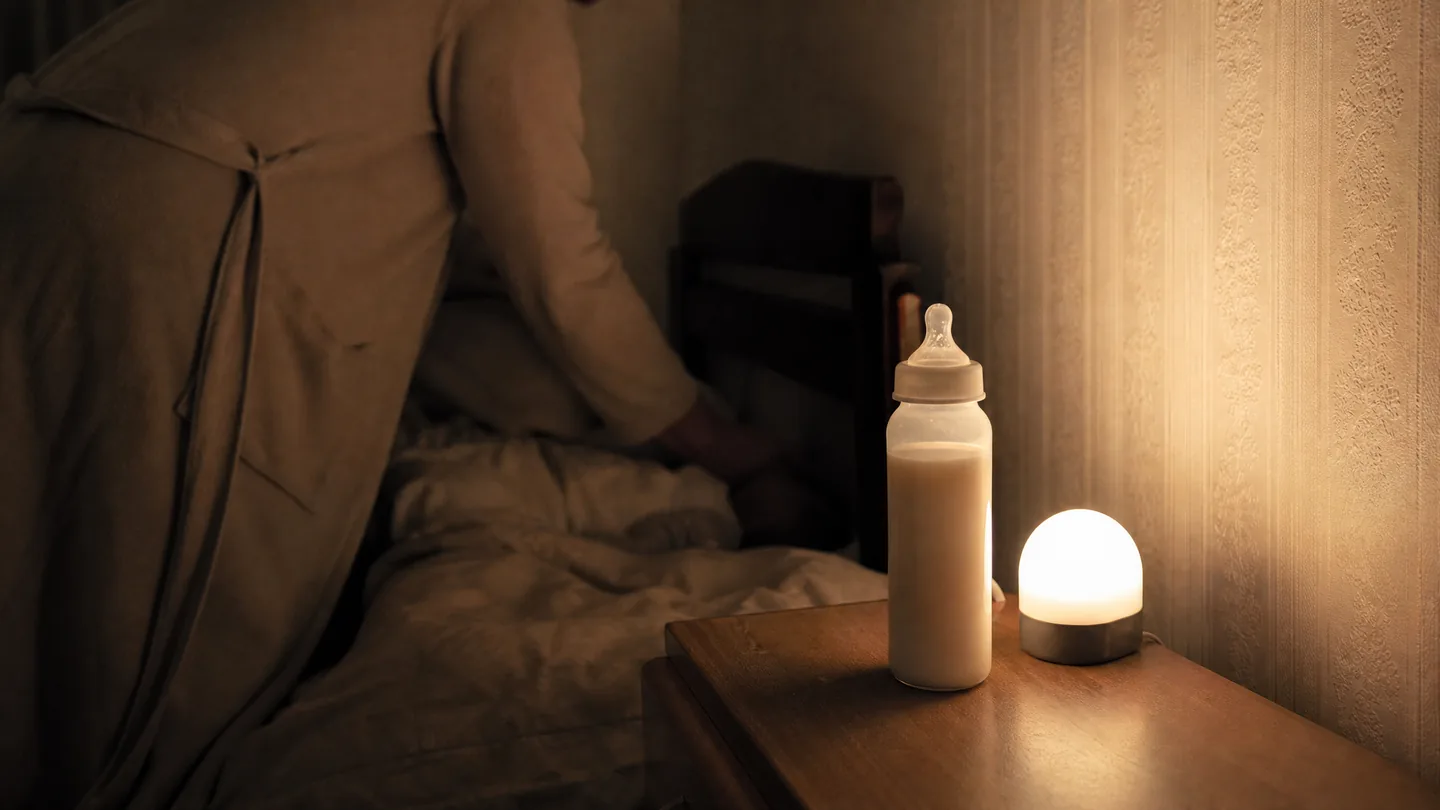
The logic is simple: top your baby up at ten or eleven at night, while they are still deeply asleep, and they will not wake hungry at one. For a certain kind of baby at a certain age, that works exactly as described.
The complication is that not every baby wakes at one because of hunger, and rousing a sleeping baby to feed them has its own costs. Done at the wrong age or on the wrong baby, a dream feed fragments the deepest sleep of the night and produces more waking rather than less.
Who it tends to help
Babies roughly between two and five months. Old enough for a long first stretch, young enough that hunger is genuinely the limiting factor.
Babies who reliably wake around midnight to one. And who feed properly when they do. A dream feed pre-empts a real feed rather than adding an unnecessary one.
Households where the parents go to bed late anyway. The value is entirely in the timing relative to your sleep, not the baby’s.
Babies who feed well while sleepy. Some will take a full feed without properly waking. Others will not feed at all, which makes the whole exercise pointless.
Who it does not help
Babies over about six months, where hunger is usually no longer the main driver of waking. Babies who wake fully during the dream feed and then take an hour to resettle. Babies whose night waking is about the falling-asleep association rather than food - for them, the dream feed adds a sleep interruption without removing one.
And any baby where the dream feed is clearly making the night worse. This is easy to test: try it for five nights, then stop for five nights, and compare. Most people have never actually run that comparison.
A dream feed is worth five nights of testing and no loyalty at all.
How to do it, and how to stop
Keep it dark and quiet, do not fully wake them, do not change the nappy unless it is necessary, and put them straight back down. Aim for roughly two to three hours after bedtime, before your own.
To stop, reduce it gradually rather than dropping it - shorten by two minutes or reduce by 20 to 30ml every couple of nights until it is negligible, then leave it out. Most families stop somewhere between four and six months, or whenever it stops earning its place.
Running the test properly
Five nights with it, five nights without, and write down the same three things each night: what time they went down, what time they first woke, and how many wakes in total. Do not change anything else during the ten nights.
Most families have never done this and are surprised by the result in one direction or the other. If the first stretch is genuinely longer on the dream feed nights, keep it. If the numbers are the same, you are waking a sleeping baby every night for nothing. And if the nights are worse with it, that is your answer too.
Getting the timing right
Two to three hours after bedtime, and before your own - the point is to consolidate your sleep, not theirs. Given too early it interrupts the deepest part of the first stretch for no gain; given too late it wakes them properly and you spend an hour resettling.
Keep it minimal: no lights, no nappy change unless it is needed, no talking, straight back down. If your baby wakes fully every time you try, the dream feed is not working for them and no adjustment to the timing will fix that. Some babies simply cannot be fed without waking, and for those it is not a tool worth pursuing.
When to stop troubleshooting
If your baby is not gaining weight well, do not remove any feed without speaking to your health visitor. If a dream feed causes a lot of vomiting or obvious discomfort, stop and mention it to your GP.
Want this worked out for your baby instead?
The quiz takes three minutes and asks about your nights, not just their age.
Take the 3-min quiz →General guidance, not medical advice. Your paediatrician's advice takes precedence.