The nap that ruins bedtime
They finally fell asleep at half past four, slept for an hour, and bedtime has now moved to nine o’clock. There is a threshold in every day after which a nap takes more than it gives, and it is worth working out where yours sits.
4 min read
Sleep pressure builds while your baby is awake and discharges while they sleep. A nap late in the day discharges a large part of the pressure that bedtime was relying on, and the body does not rebuild it quickly. That is why an hour at five o’clock can cost you two hours at seven.
The threshold is not a fixed time on a clock. It depends on the wake window your baby needs, which means it moves with age and moves again during transitions. But it can be calculated, roughly, and the calculation is more useful than a rule of thumb.
Working out your threshold
Take your target bedtime. The one that actually works in your house, not an aspirational one.
Subtract the final wake window for their age. Two and a half hours at six months, three at nine, four or more past a year.
That is the latest a nap can end. For a 7pm bedtime and a three-hour window, any nap must be finished by four o’clock.
Cap rather than prevent. If they fall asleep at half past three, wake them at four. Twenty-five minutes of sleep is usually better for the evening than an hour.
Should you wake them?
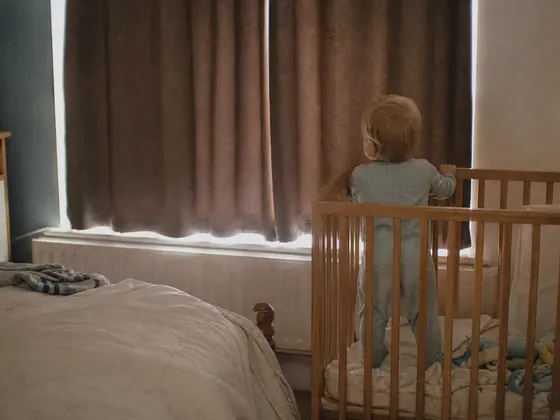
Yes, more often than most people are comfortable with. Waking a baby feels wrong and it is one of the more useful tools available. Do it gently and gradually - open the curtains, make some ordinary noise, let them surface on their own over five minutes rather than lifting them straight out.
There is one exception worth respecting. If the day has fallen apart, the naps were short, and your baby is genuinely exhausted, a late nap plus a later bedtime is sometimes the least bad option. That is a judgement call, not a rule to break - but a single rescued afternoon is better than an overtired child fighting bedtime for an hour.
After a certain hour, a nap doesn’t add sleep. It moves it, and usually to a worse place.
What to do instead
The late afternoon is easier to survive outside. A walk, the garden, a change of room - daylight and movement both push back against the slump, and they buy fifteen or twenty minutes, which is often all you need. Bringing dinner and the bath forward by half an hour works too, and is easier to sustain than an entertainment programme.
If you are regularly capping the last nap and bedtime is still difficult, the problem is more likely the total daytime sleep than its timing, and that is worth looking at across the whole day rather than in the afternoon alone.
Waking a baby without a fight
Done badly, waking a sleeping baby produces a furious one and an unusable hour. Done gradually it usually passes without incident. Start five minutes before you need them up: open the curtains, put the light on in the hallway, start talking normally in the next room, open the door.
Let the room get louder and brighter around them and let them surface on their own. Lifting a deeply asleep baby straight out is what causes the outrage. If they are still going after five minutes of ordinary household noise, pick them up gently, hold them for a minute before doing anything else, and take the nappy change slowly.
The days it is worth breaking the rule
If both naps failed, the day has been long, and your baby is falling apart at half past four, a short late nap plus a later bedtime is sometimes the least bad option available. A genuinely overtired child fights bedtime for an hour and then sleeps badly, which costs more than the late nap would have.
The distinction is between rescuing a broken day and running a broken day as a routine. Once a week is a judgement call. Three times a week means the schedule itself is wrong, and the useful work is on the earlier naps rather than on the decision at four o’clock.
When to stop troubleshooting
A baby who cannot make it through the late afternoon regardless of how the day is arranged, who seems exhausted constantly, or whose sleepiness has changed suddenly, is worth discussing with your health visitor rather than scheduling around.
Want this worked out for your baby instead?
The quiz takes three minutes and asks about your nights, not just their age.
Take the 3-min quiz →General guidance, not medical advice. Your paediatrician's advice takes precedence.