9–10 months: practising at 2am
You go in at two in the morning to find them standing at the cot rail, wide awake and stuck. This is not defiance and it is not a sleep problem exactly - it is a motor skill being rehearsed at an inconvenient hour.
4 min read
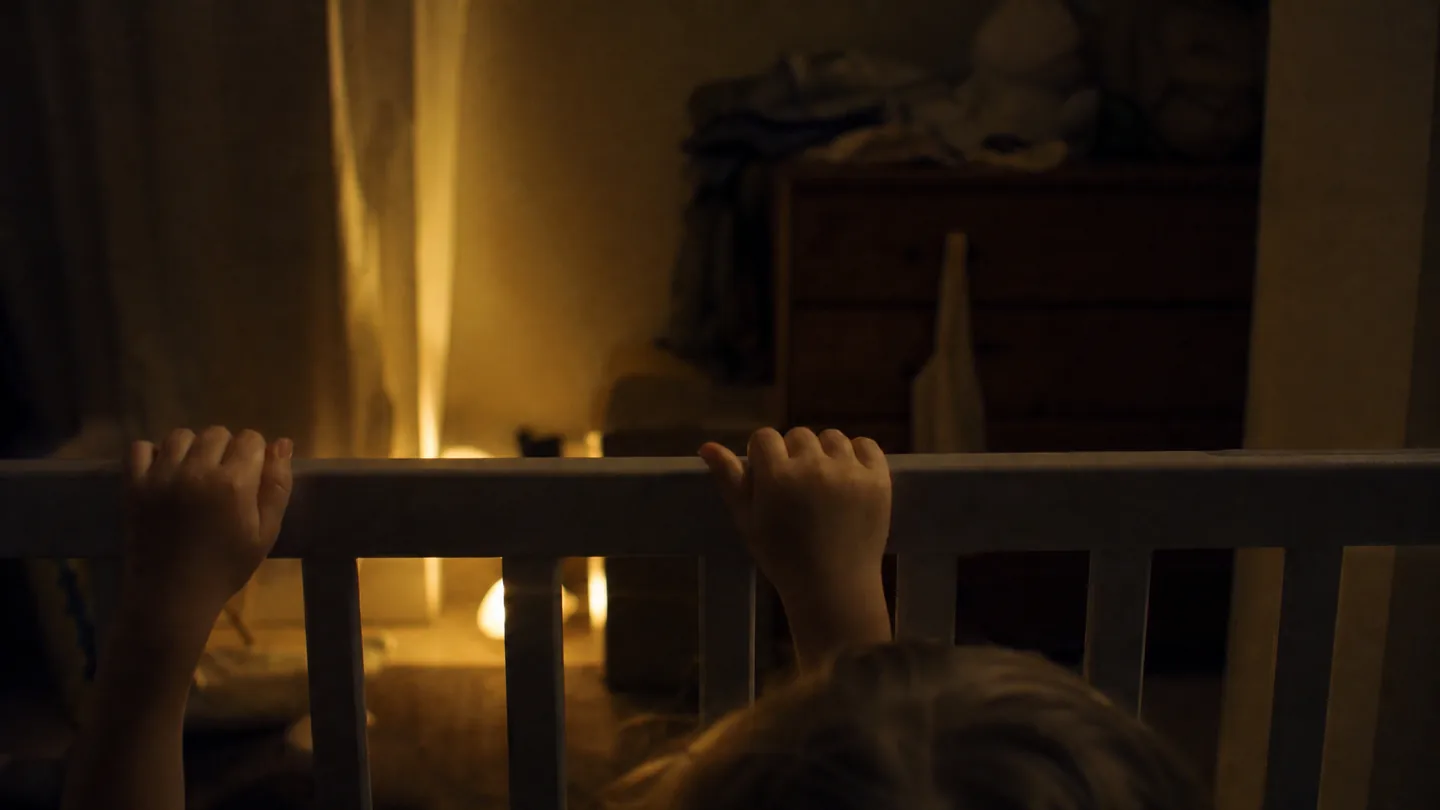
Sleep is when the brain consolidates what it learned during the day, and for a baby in the middle of a motor leap that consolidation is not purely mental. Newly acquired movements get practised, sometimes literally, during light sleep and at cycle boundaries. A baby who has just learned to pull to stand will pull to stand at two in the morning without any real decision being involved.
The particular problem at this age is that standing up arrives several weeks before sitting back down does. They get up, they cannot get down, and they are genuinely stuck - which is a reasonable thing to cry about.
What to do
Teach getting down, in daylight. Practise lowering from standing on the floor and in the cot, repeatedly, during the day. This is the actual fix and it usually takes a week or two.
Give the new skill hours of daytime practice. Floor time, cruising along furniture, pulling up on the sofa. A well-rehearsed skill demands less rehearsal at night.
Lie them down without ceremony. When they are stuck, help them down calmly, in the dark, with almost no interaction, and leave. If they stand straight back up, help once or twice more, then let them work at it.
Lower the cot base. This is the age for it, and it needs doing before they can pull up confidently rather than after.
Check the cot itself
A baby who can pull to stand needs the mattress at its lowest setting, nothing in the cot they could climb on, and no bumpers, pillows or large toys. Cot-side products and sleep positioners are not recommended. This is also the moment to check that anything near the cot - cords, blind pulls, shelves - is out of reach.
Sleeping bags are useful here: they make standing possible but climbing harder, and they remove the loose-bedding question entirely.
They aren’t protesting. They got up, and they don’t know how to get back down yet.
How long it lasts
Two to four weeks typically, resolving once sitting down from standing becomes automatic. Keeping the schedule steady through it matters - a fortnight of restructuring the day in response to a motor leap usually leaves you having to restructure it back.
Expect naps to be affected as much as nights, and expect an early bedtime to be useful on the days a nap is lost to practising.
Whether to go in at all
A baby standing in the cot at two in the morning is not necessarily stuck. Plenty will drop back down on their own within a few minutes if left, particularly once they have had a couple of weeks of practice at getting down. Going in the moment you see them standing removes the chance to try.
So wait a little and listen. Grumbling and shuffling usually resolves. Escalating crying means they are genuinely stuck and need help. When you do go in, lie them down without ceremony and leave - and if they stand straight back up two or three times, help twice and then let them work at it for a few minutes before helping again.
Checking the cot again
A baby who can pull to stand needs the cot setup revisited, and it needs doing before they can do it confidently rather than after. The mattress goes to its lowest setting. Anything they could climb on comes out - including bumpers, large toys and any sleep positioner still in there.
Then look at what is within reach from a standing position: blind cords, cables, shelves, a changing table, anything on a wall. Cot-side toys and mobiles come off. A sleeping bag helps here - it permits standing while making climbing considerably harder, and it removes the loose bedding question entirely.
When to stop troubleshooting
If your baby is not attempting to sit, crawl or bear weight by around ten months, has lost skills they previously had, or if night waking comes with fever, pain or a change in feeding, speak to your health visitor or GP.
Want this worked out for your baby instead?
The quiz takes three minutes and asks about your nights, not just their age.
Take the 3-min quiz →General guidance, not medical advice. Your paediatrician's advice takes precedence.