Teething nights without losing the plan
A tooth is coming and the nights have gone. You are allowed to do whatever gets everyone through it - the thing that matters is going back afterwards, promptly.
3 min read
Teething genuinely hurts, and it hurts more lying down: blood flow to the head increases when horizontal, and there is less to distract from it at two in the morning than at two in the afternoon. That is why a baby who seemed fine all day falls apart at night.
It is also short. The acute discomfort around any individual tooth lasts a few days - commonly two or three, sometimes up to five. Weeks of disruption is not teething, whatever else it is.
Loosening the rules
Give more help, not different help. More patting, longer settling, an extra cuddle. Keep the shape of what you normally do and simply do more of it.
Consider pain relief. Infant paracetamol or ibuprofen, at the dose appropriate for their age and weight, is reasonable for a genuinely uncomfortable night. Check with a pharmacist or GP if you are unsure, and follow the label.
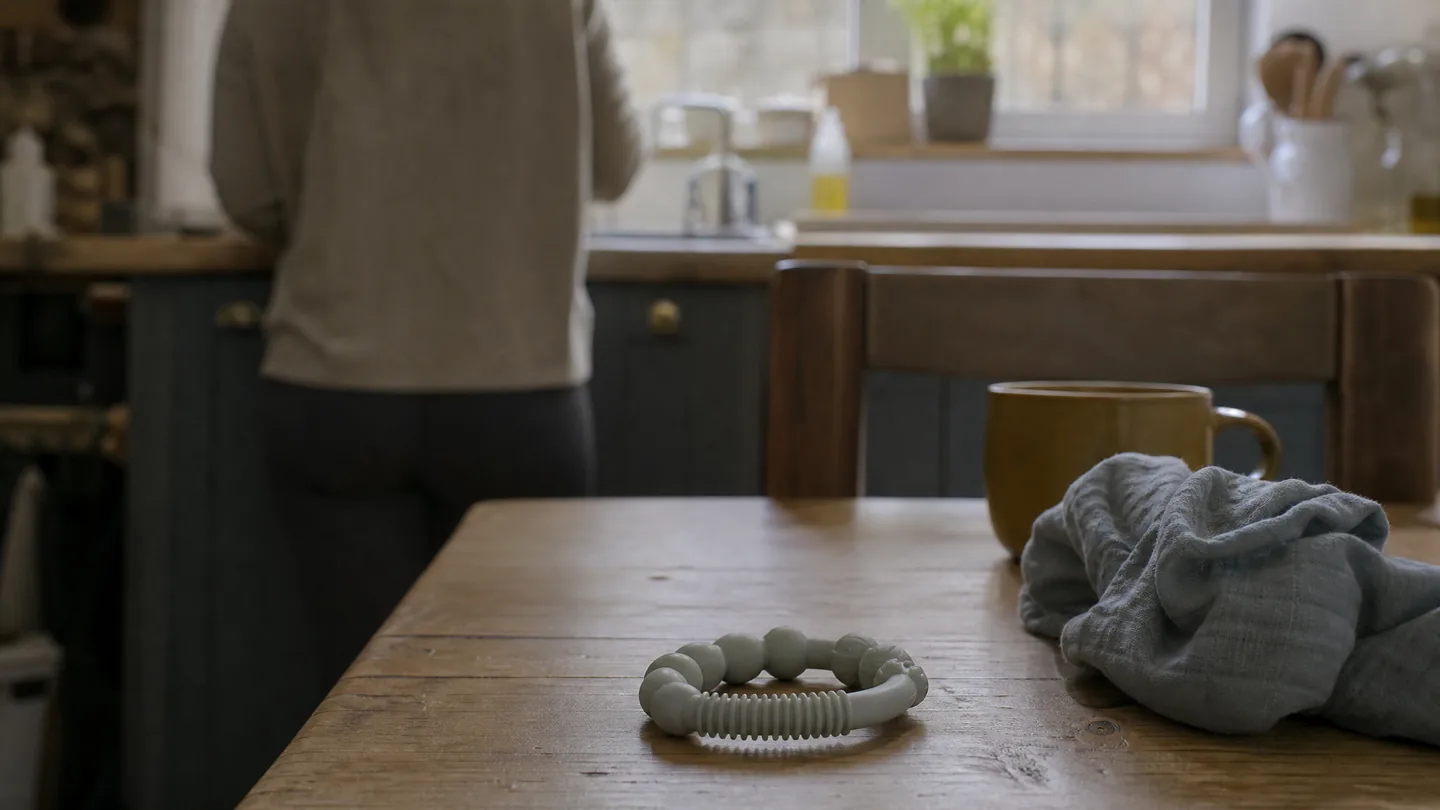
Something cold to chew, in the day. A chilled - not frozen - teething ring, or a clean cold flannel. Never anything that could break or be a choking hazard, and never a teething necklace, which carries strangulation and choking risks.
Bring bedtime forward. Broken nights build a sleep debt fast, and an overtired baby copes with pain worse.
Avoid teething gels for young babies. Products containing sugar or lidocaine are not recommended for infants. Ask a pharmacist about what is suitable.
Coming back
The habits form fast and they come apart just as fast if you act within a few days. Once the tooth is through and the daytime mood has recovered, go straight back to whatever you were doing before - the same night, not gradually.
Expect one or two nights of protest at the return. That is much less work than a fortnight later, when the new arrangement has become the arrangement.
Loosen for three nights and tighten on the fourth. It is the delay that costs you, not the loosening.
What teething is not
Teething does not cause fever, diarrhoea, vomiting or a rash beyond mild drool irritation on the chin. Attributing those to teeth delays finding the real cause, and it is the single most common way a genuine illness gets missed in the first two years.
Which teeth are worst
Not all of them cause trouble. The first two, usually the bottom front, often arrive with barely any disruption. The ones that reliably cost sleep are the first molars, somewhere between twelve and sixteen months, and the second molars around two - larger teeth, broader surfaces, and considerably more discomfort.
Knowing that helps with attribution. A rough fortnight at eighteen months is plausibly teeth. A rough fortnight at seven months attributed to a tooth that never appears was probably something else, and continuing to blame teeth means whatever is actually happening goes unaddressed.
What does not work
Amber teething necklaces and bracelets have no evidence behind them and carry genuine strangulation and choking risks. They should not be worn, and certainly never during sleep. Teething gels containing sugar or lidocaine are not recommended for infants, and homeopathic teething tablets have been withdrawn in some countries after safety concerns.
Frozen teething rings can damage gums - chilled rather than frozen is the guidance. And anything that could break, splinter or be bitten through is a choking risk. A clean cold flannel to chew on is cheap, safe and works about as well as anything sold for the purpose.
When to stop troubleshooting
A temperature over 38°C, diarrhoea, vomiting, a rash, refusing feeds, pulling at an ear, or a baby who is inconsolable - none of those are teeth. See your GP. Any fever in a baby under three months needs same-day medical advice.
Want this worked out for your baby instead?
The quiz takes three minutes and asks about your nights, not just their age.
Take the 3-min quiz →General guidance, not medical advice. Your paediatrician's advice takes precedence.