Four workable systems for dividing the night
You have agreed to divide the night and now need an actual system. Here are four, with the situations each one suits and the thing that makes it fail.
3 min read
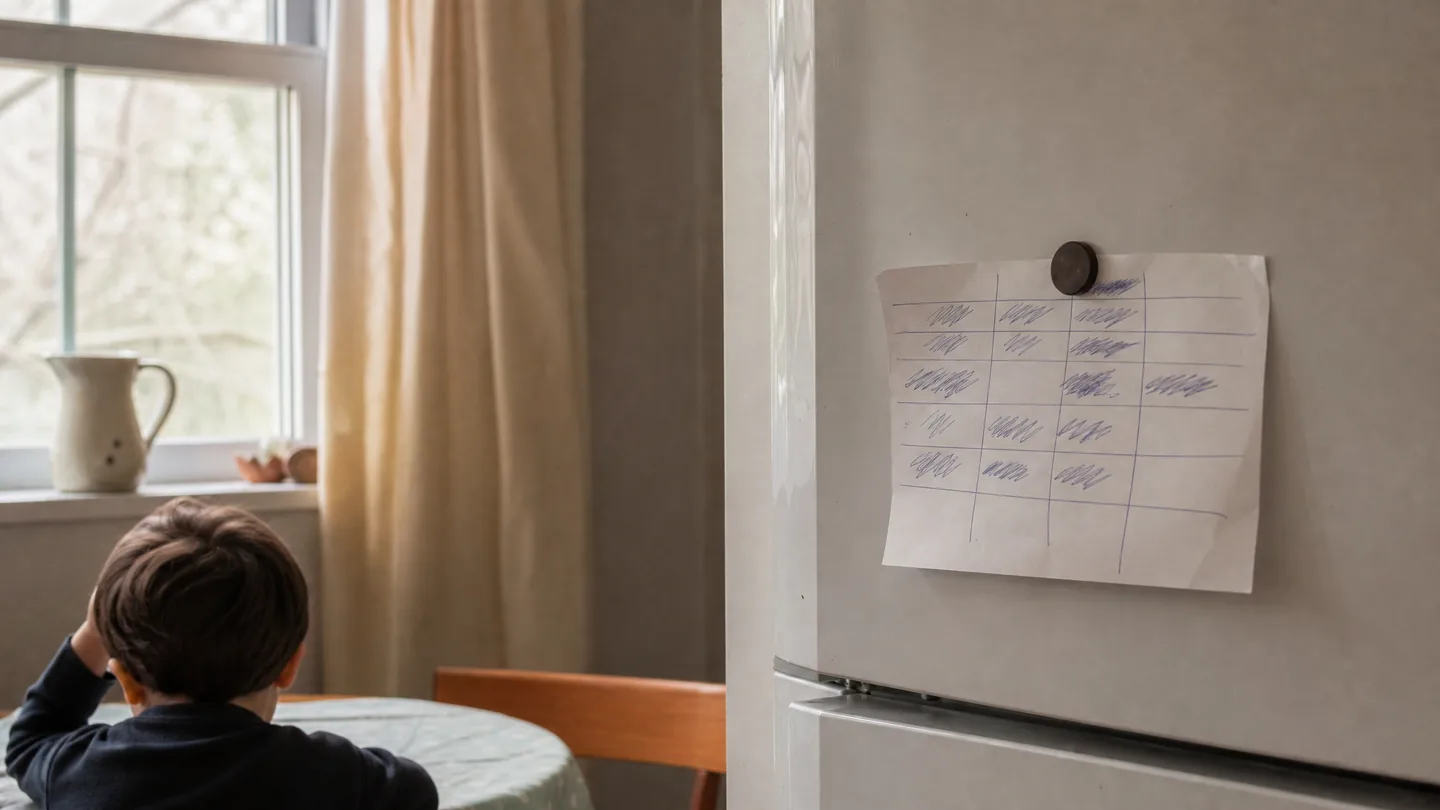
What all four have in common is that one person is genuinely off duty for a defined block, in another room, not listening. A rota where both parents are awake for every wake is not a rota; it is the current situation with a schedule attached.
The four systems
Split shifts: 9pm–2am and 2am–7am. Each parent gets one solid block. Suits formula or mixed feeding, and households where both work. Fails if the off-duty parent stays in the same room.
Alternate nights. One person owns the entire night, the other sleeps properly and swaps the next day. Suits older babies with fewer wakes, and anyone who cannot function on repeated partial nights. Fails if the on-duty night is so hard that both end up awake.
Feeds only. The breastfeeding parent does feeds and nothing else - the other does every nappy, every resettle, every non-feed wake, and brings the baby to and from the bed. Keeps feeding intact and still removes half the work. Fails if the non-feeding parent hands over at the first sound.
The early night. One parent goes to bed at eight and takes everything from 1am. The other holds the evening and the first stretch. Suits households where one person struggles badly with early starts. Fails if the early-to-bed parent stays up scrolling.
Choosing between them
Start with the constraints: who is feeding, who is working, who copes worse with which kind of tiredness. Some people are wrecked by a late night and fine with an early start; for others it is the reverse, and that is a real difference worth designing around rather than arguing about.
Then trial it for a week before judging. The first two nights of any rota are worse than the average, because nobody is used to it.
A rota where both of you hear every wake is not a rota. Another room, and no monitor.
The rules that make any of them work
Agree it in daylight, for the week. Write it down. Define what happens when it goes badly - a time limit after which the off-duty parent gets woken, decided in advance so it is a plan rather than a collapse.
And make sure both of you can settle the baby. If only one can, that is the first thing to fix, and it takes about a fortnight.
Reviewing it weekly
Look at the rota once a week, at a reasonable hour, and change it if it is not working. Babies change, the number of wakes changes, work changes, and an arrangement that suited the six-month-old is often wrong for the nine-month-old.
Reviewing it on a schedule also removes the need to raise it as a grievance. A weekly five-minute conversation about what worked is a much easier thing to have than a fortnight of accumulating resentment followed by an argument about who is more tired - which is the same conversation, held badly, at the worst possible time.
When there are older children too
A second child changes the arithmetic, because the off-duty parent is no longer guaranteed an unbroken night - a three-year-old can appear at two in the morning regardless of whose shift it is. Assign the older child explicitly, or the rota quietly stops working.
A common arrangement is that one parent owns the baby and the other owns the older child, for the whole night, with no swapping. It is less equal on paper and it means each of you has one predictable job, which at three in the morning is worth more than fairness.
When to stop troubleshooting
If no rota is working because neither of you can sleep at all, or if exhaustion has become low mood, anxiety or an inability to function, speak to your GP or health visitor. If you are a single parent or your partner is away, the systems above do not apply and there is a different plan worth reading.
Want this worked out for your baby instead?
The quiz takes three minutes and asks about your nights, not just their age.
Take the 3-min quiz →General guidance, not medical advice. Your paediatrician's advice takes precedence.