Splitting nights so one of you sleeps
You are both up for every wake, both exhausted, and both convinced you are doing more than the other. Dividing the night properly means one of you sleeps, and one person sleeping is worth more than two people half-sleeping.
3 min read

Fragmented sleep is disproportionately damaging. Six hours broken into four pieces leaves you worse off than five hours unbroken, because the deep restorative stages need uninterrupted time to reach. Two parents each getting four broken hours is a worse outcome for the household than one parent getting six solid ones.
That is the case for splitting rather than sharing. It feels less fair and it produces more functional adults.
The four arrangements
Split shifts. One takes until 2am, the other takes 2am to morning. The off-duty parent sleeps elsewhere with earplugs. Best for formula or mixed feeding, and the cleanest of the four.
Alternate nights. One person owns the whole night, the other sleeps properly. Then swap. Brutal on the on-duty night and it gives everyone one genuinely restorative night in two.
The feeding split. The breastfeeding parent does the feeds and nothing else - no nappies, no resettling, no getting up. The other does everything that is not a feed. Keeps feeding intact while still offloading half the work.
The weekend rota. The parent who works does two nights at the weekend and the other sleeps through. Realistic when one of you must function at work all week.
Decide in daylight
This is the part that matters more than which arrangement you pick. Every rota that gets negotiated at two in the morning turns into an argument, because neither of you is capable of a reasonable conversation at that hour and both of you are certain you are the more tired one.
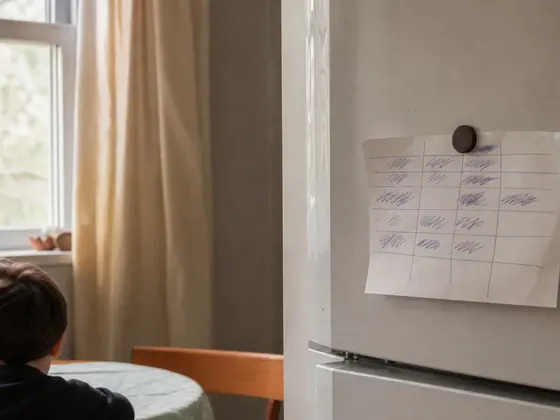
Agree it at breakfast, for the week ahead. Write it on the fridge. Include what happens if it goes badly - “if it goes past forty minutes, wake me” is part of the plan rather than a failure of it.
Two people half-sleeping is worse for the household than one person sleeping properly. Fairness at night is measured over a week, not over a night.
Making the off-duty shift real
The off-duty parent has to be genuinely off duty: another room, earplugs, no monitor. Lying awake listening while someone else settles the baby produces none of the benefit and all of the exhaustion.
This also requires both parents to be able to settle the baby. If only one of you can, that is the first problem to solve, and it takes about a fortnight.
Keeping score, and why it goes wrong
Every exhausted household ends up keeping score, and the scoring is always disputed, because each of you can only see your own nights properly. The parent who did three wakes remembers three wakes; the parent who slept through them counts zero and is told they did nothing.
Write the rota down and let the paper keep score. Fairness measured over a week is a solvable problem; fairness measured at three in the morning by two exhausted people is not. And build in what happens when a night goes badly - “if it goes past forty minutes, wake me” - so the backup is part of the arrangement rather than a favour that has to be asked for.
Making the off-duty shift genuine
Another room, door closed, earplugs, no monitor. Lying in the same bed listening while your partner settles the baby produces none of the benefit and all of the exhaustion - you are awake for the wake, you are simply not getting up for it.
A spare room, a sofa or a mattress on the floor is worth arranging for this, even if it feels like an odd way to live for a few months. The point is one person getting a genuinely unbroken block, and unbroken is the operative word rather than long.
When to stop troubleshooting
If neither of you is functioning despite a rota, if you are falling asleep unintentionally during the day or while driving, or if exhaustion has tipped into low mood or anxiety, speak to your GP or health visitor. Both are common and both have support available.
Want this worked out for your baby instead?
The quiz takes three minutes and asks about your nights, not just their age.
Take the 3-min quiz →General guidance, not medical advice. Your paediatrician's advice takes precedence.