Settling a baby who has always been rocked
You have rocked them to sleep since birth, they now weigh a great deal more than they used to, and your back has an opinion about it. The way out is not a new method - it is moving the moment of falling asleep, in stages.
3 min read
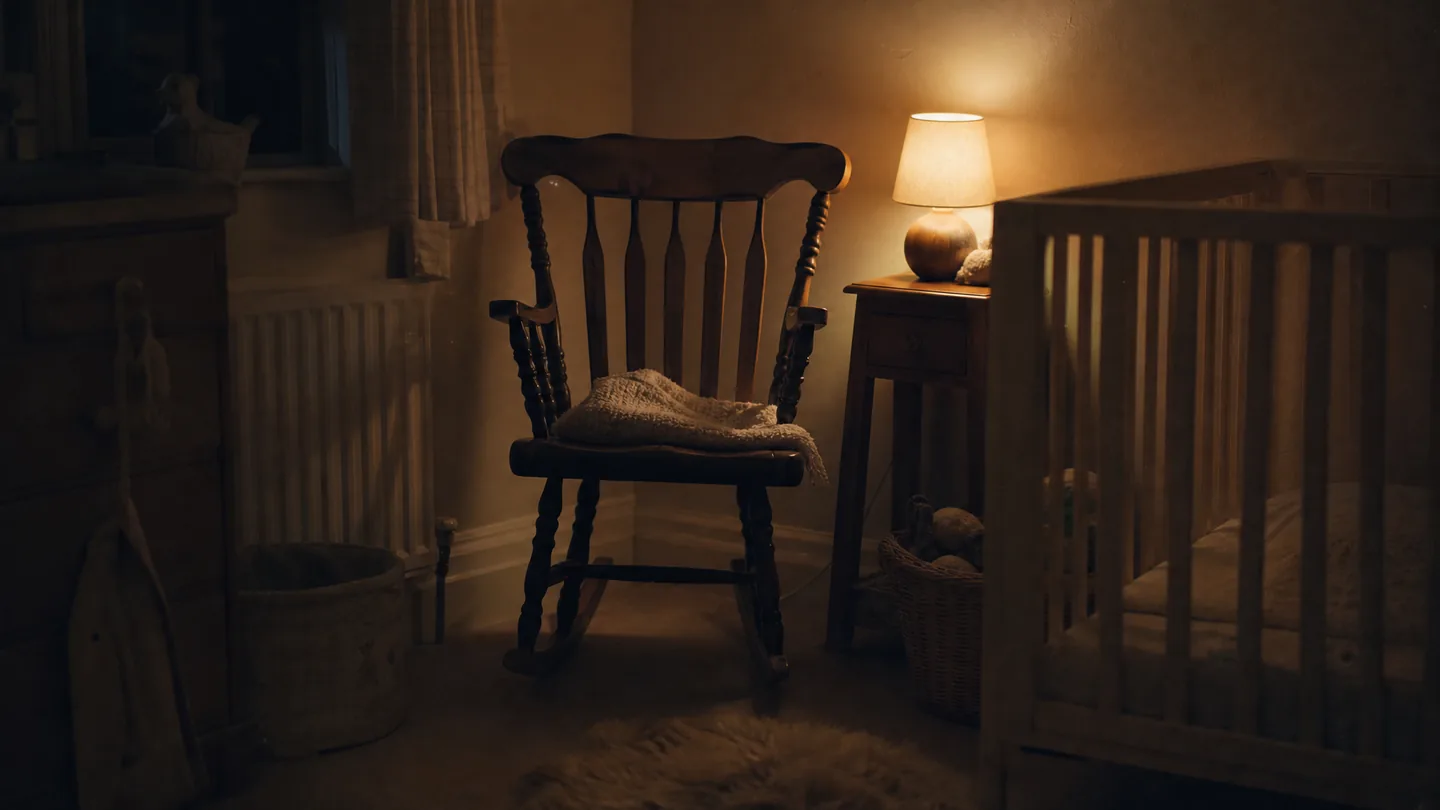
Rocking works because motion is a powerful sleep cue. The difficulty is not that it is wrong; it is that motion cannot continue all night, so every cycle boundary arrives with a mismatch between how sleep began and where they now are.
What has to change, then, is where the final transition into sleep happens. Everything else - the rocking, the closeness, the comfort - can stay for as long as you like.
The steps
1. Rock to nearly asleep. Stop while their eyes are still opening and closing, and put them down. Stay, with a hand on them.
2. Rock to calm, not drowsy. Settled and awake. Put them down and settle the rest of the way in the cot with your hands.
3. Rock standing still. Hold them, sway slightly, no walking. Then down while awake.
4. Hold without motion. A cuddle rather than rocking, then into the cot.
5. Straight into the cot. With you beside them, doing whatever settling is needed there.
Pace and expectations
Three to five nights per step, and only move on when the current one is working reliably. Start at bedtime and leave night wakes alone entirely - rock at 2am for as long as you need to. Night wakes usually improve on their own once bedtime changes, and if they do not, work on them afterwards, one at a time.
Expect three to six weeks for the whole sequence. Expect a bad night in the middle of every step for no reason. And expect to go backwards during teeth and illness - rock them, and pick the step back up afterwards. Nothing is lost.
You are not taking the rocking away. You are stopping it thirty seconds earlier, and then a minute earlier.
If it stalls
The usual reason is timing. A baby put down at the wrong point in their wake window will not settle in a cot no matter how gradual the approach. Check that before concluding the method has failed.
The second most common reason is moving too fast. Going back a step and staying there for a week is almost always the right response to a stalled fortnight.
Your back, in the meantime
Worth saying, because it is often the reason people start: rocking a heavy baby for forty minutes twice a day causes real injuries, and a parent with a damaged back is a genuine household problem. If that is where you are, the transition is not optional and it is not indulgent.
While you are working through the steps, sit rather than stand where you can, keep the baby high and close rather than at arm’s length, and swap sides. A rocking chair does most of the work a pacing parent does and costs your spine considerably less. If both of you can settle them, alternate - and if only one of you can, that is the more urgent problem to fix.
Naps versus bedtime
Do bedtime first and leave naps alone entirely. Sleep pressure is highest at bedtime, the descent into sleep is quickest, and the routine is longest - every condition favours you. Naps are the hardest sleeps to change and the least important to change first.
Once bedtime is working reliably, move to the first nap of the day, which is the next easiest. The late-afternoon nap can stay in your arms indefinitely; plenty of families never move it, and it costs nothing to leave it there while everything else changes.
When to stop troubleshooting
A baby who becomes distressed lying flat, who can only sleep upright, or who arches and cries when put down, may have a physical reason for it - reflux and nasal obstruction both present this way. Speak to your GP or health visitor rather than persisting with the steps.
Want this worked out for your baby instead?
The quiz takes three minutes and asks about your nights, not just their age.
Take the 3-min quiz →General guidance, not medical advice. Your paediatrician's advice takes precedence.