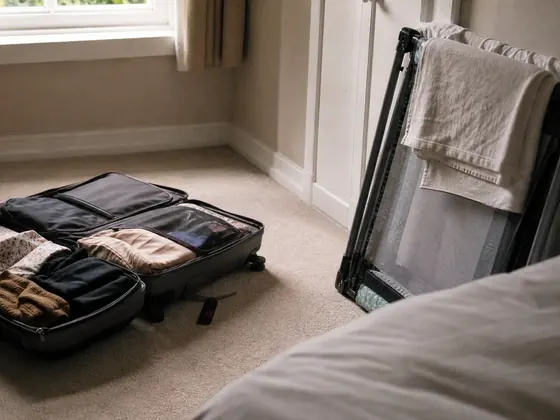
Moving house
You are moving with a baby and sleep is the thing you are most worried about losing. One rule covers most of it: the nursery is the last room packed and the first room assembled.
3 min read
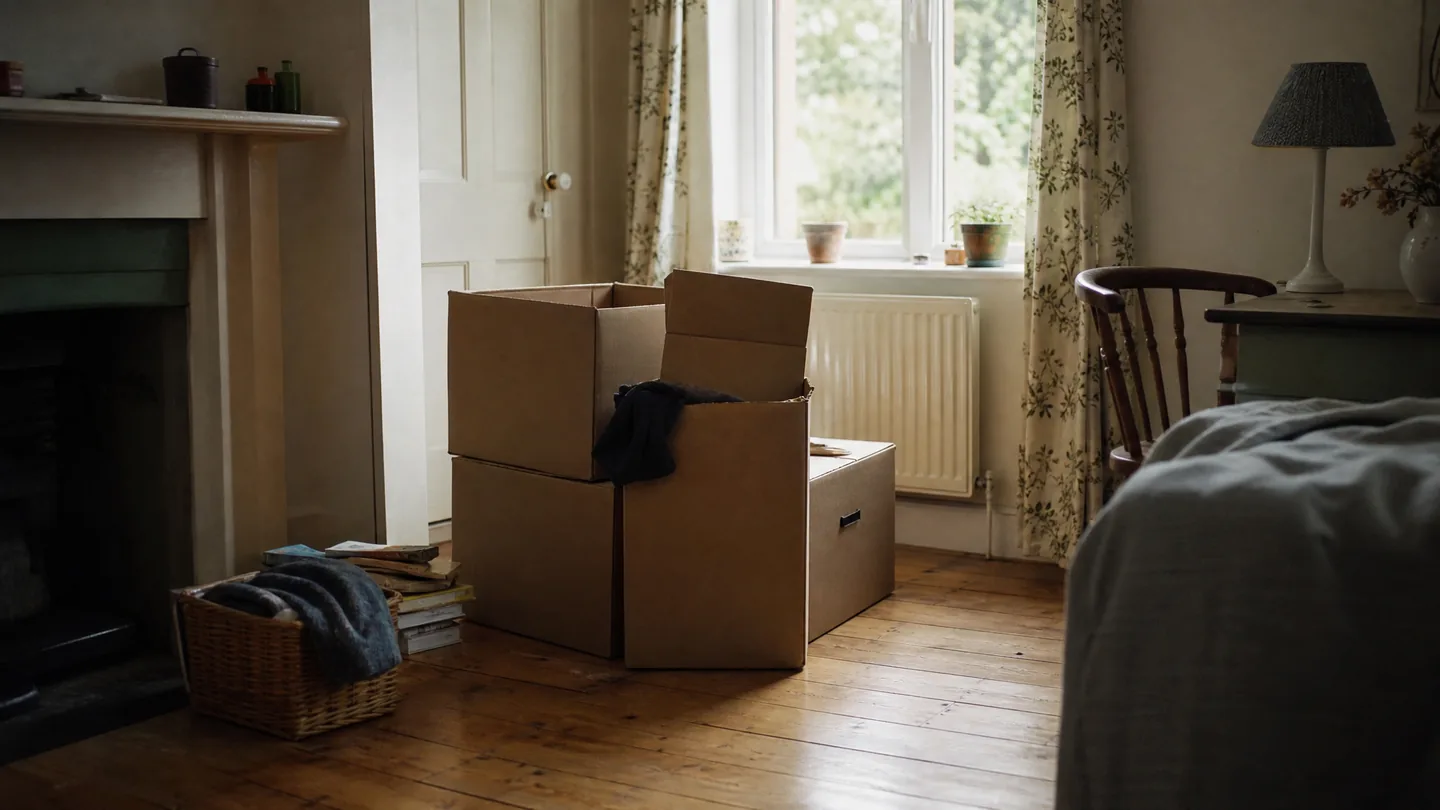
Babies do not care about the house. They care about the specific conditions of their sleep - the darkness, the sound, the smell of the sheet, the sequence of the routine. Those can be reproduced in any room in an afternoon, and if they are, the move is much smaller than it looks.
What causes trouble is the first night in a half-built room, at the end of a chaotic day, with the cot still in pieces at seven o’clock.
The plan
Pack the nursery last. It stays functional until the morning of the move. Living out of boxes elsewhere is fine.
Assemble it first. Before the kitchen, before your own bed. Cot up, blackout up, white noise plugged in, before anything else is unpacked.
Bring the same sheet, unwashed. And the same sleeping bag, and the same comforter if they have one. Smell carries more than anything visual.
Keep the routine exactly. Same order, same words, same timing, even if the bath is not plumbed in and you use a washing-up bowl.
Get help for moving day. Someone to have the baby for a few hours makes the difference between a room ready by six and a room ready by nine.
Beforehand and after
If you can visit the new house before moving, spend time in the room in daylight and let them nap there once. Familiarity beats explanation for anyone under two.
Afterwards, expect three to seven nights of extra waking and extra clinginess, and expect to do more settling than usual. Go to them as you normally would, and do not change your approach this week - one change at a time, and the house is the change.
The kitchen can wait. The cot cannot.
Safety in the new room
Check it properly before the first night, because unfamiliar rooms have unfamiliar hazards: blind cords near the cot, radiators, windows, furniture that needs anchoring to the wall, and sockets. Position the cot away from the window and away from anything reachable.
Check the temperature too. A different house heats and cools differently, and a room that runs warm is a common and invisible cause of a bad first week.
The weeks either side
Sleep often deteriorates before the move rather than after it. Boxes appear, furniture goes, the house sounds different, and everybody in it is stressed. Babies pick that up long before anything happens to their own room.
Expect a fortnight of extra waking either side, and do not add anything else to it. This is not the month to move from a cot to a bed, drop a nap deliberately, start nursery, or begin any settling work - all of which people schedule around a move because it feels like a natural moment for change. Do them six weeks later.
The night before and the night after
Both are worth planning specifically. On the last night in the old house, keep everything normal - resist the temptation to pack the nursery early. On the first night in the new one, the room should be finished before bedtime, with blackout up and the cot made with the same unwashed sheet.
If you can arrange for someone to have the baby for the middle of moving day, that is the single most useful piece of help available. It is the difference between a room ready at six and a room half-built at nine with an overtired child in the doorway.
When to stop troubleshooting
If sleep has not recovered after two or three weeks, look at the room itself - temperature, light, noise - before concluding it is emotional. Persistent distress, a change in mood or development, or a child who seems frightened of the room, are worth raising with your health visitor.
Want this worked out for your baby instead?
The quiz takes three minutes and asks about your nights, not just their age.
Take the 3-min quiz →General guidance, not medical advice. Your paediatrician's advice takes precedence.