Pat-shush and the hands-on approach
If you want the gentlest possible thing that still moves the falling-asleep moment into the cot, this is it. It suits younger babies particularly, and it is designed to be reduced rather than kept.
4 min read
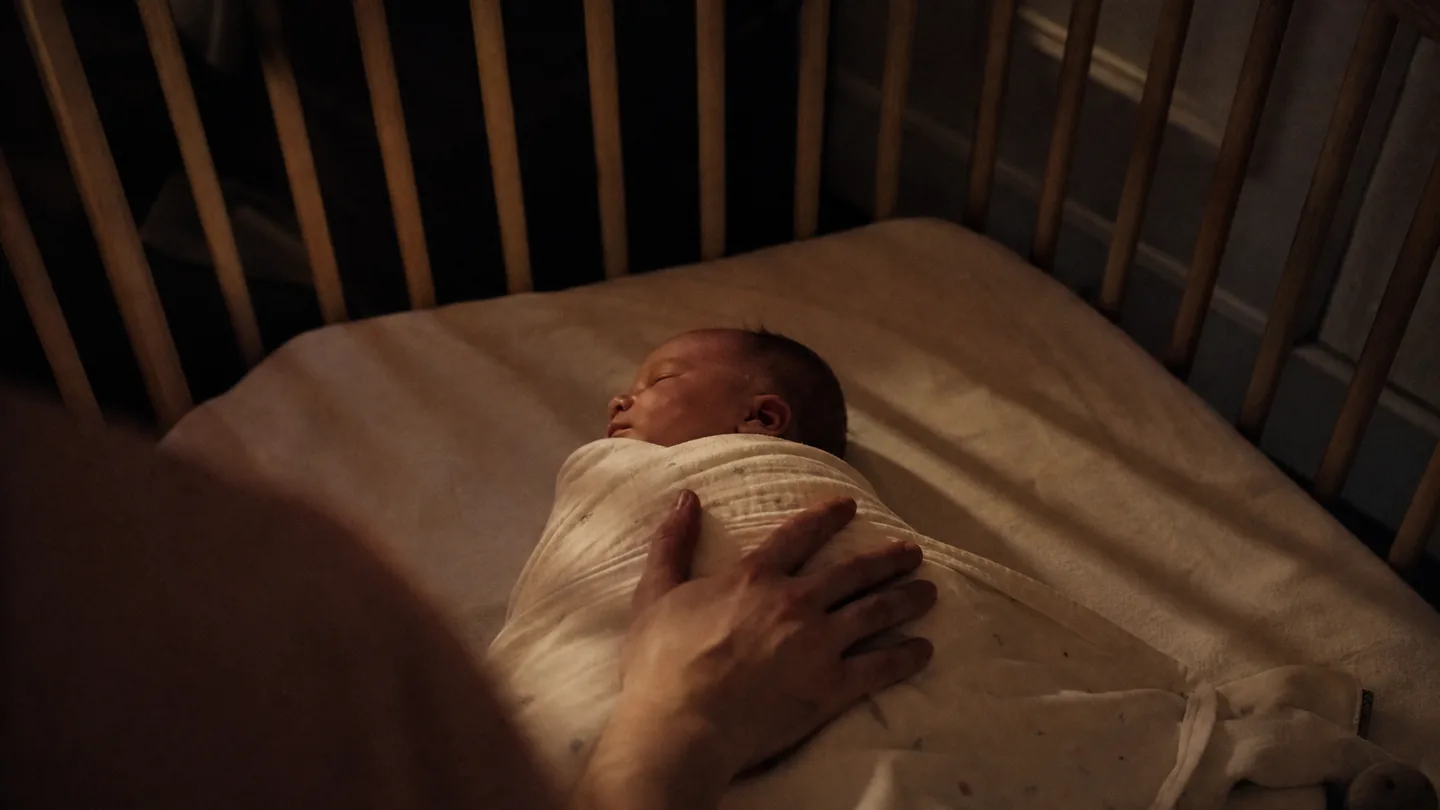
Pat-shush is rhythmic touch and sound applied while your baby lies in their cot: a slow steady pat on the chest, side or bottom, and a low continuous shush close to their ear. Both mimic the environment before birth, where constant sound and movement were the background.
Its virtue is that the baby is in the cot the whole time. All the soothing is happening, and it is happening where sleep is meant to occur - which is the thing that needs to be true for anything to change.
The technique
Slow and steady, roughly a beat a second. Rhythm matters more than firmness. Fast patting stimulates rather than soothes.
Shush close and low. Near the ear, continuous, at about the volume of a shower. Quiet shushing from across the room does nothing.
Side or bottom, not the front. For a baby on their back, patting the side of the body or the nappy is easier and less rousing than the chest.
Reduce as they settle. Slow the pat, soften the shush, then still hand only, then hand off. This tapering within a single settle is most of the method.
Stop before they are fully asleep, if you can. Even a few seconds of drifting off without your hand is the skill being practised.
Who it suits
Best under about eight months, and particularly good from four to six, when babies still respond strongly to rhythmic input and are not yet stimulated by it. It is also useful for babies who find being picked up too rousing, and for parents who are not comfortable with any separation at all.
Older babies frequently find it irritating rather than calming - they push the hand away, or the patting keeps them alert. When that happens, a still hand with no rhythm at all often works better, and gradual retreat suits them from there.
All the comfort you like, delivered in the cot. Where it happens matters more than how much of it there is.
How to wind it down
Pat-shush is a bridge rather than a destination. Once your baby is settling reliably with it, reduce in stages: shorter patting, then a still hand, then a hand removed before sleep, then presence without touch. Each stage for three or four nights.
From there it becomes gradual retreat, and the transition is usually smooth because your baby has already been falling asleep in the cot for weeks.
Common ways it goes wrong
Patting too fast is the most frequent. Anxious parents speed up, and a rapid pat is stimulating rather than soothing - roughly one beat a second is the target, slower than feels natural. Shushing too quietly is the second: from across the room it does nothing, and it needs to be close and about as loud as a shower.
The third is continuing until fully asleep, every time, for months. That turns the patting into the new sleep condition, and now it is required at every cycle boundary. Reducing within each settle - slowing the pat, then stopping it before they are quite gone - is what keeps it a bridge rather than a destination.
Where it fits alongside other approaches
It is most useful as the first stage of something longer. A baby who has always been fed or rocked to sleep can move to pat-shush in the cot as an intermediate step, which changes the location of falling asleep without removing physical comfort.
From there the reduction is gradual: less patting, then a still hand, then a hand removed before sleep, then presence without touch. By the time you reach that point you are doing gradual retreat, and the transition is usually smooth because your baby has already been falling asleep in the cot for weeks.
When to stop troubleshooting
Stop if patting is clearly stimulating rather than settling. Do not start settling work with a baby who is unwell or in pain. Persistent inability to settle despite consistent effort, particularly with snoring or noisy breathing, is worth raising with your health visitor.
Want this worked out for your baby instead?
The quiz takes three minutes and asks about your nights, not just their age.
Take the 3-min quiz →General guidance, not medical advice. Your paediatrician's advice takes precedence.