Protest crying: where the line is
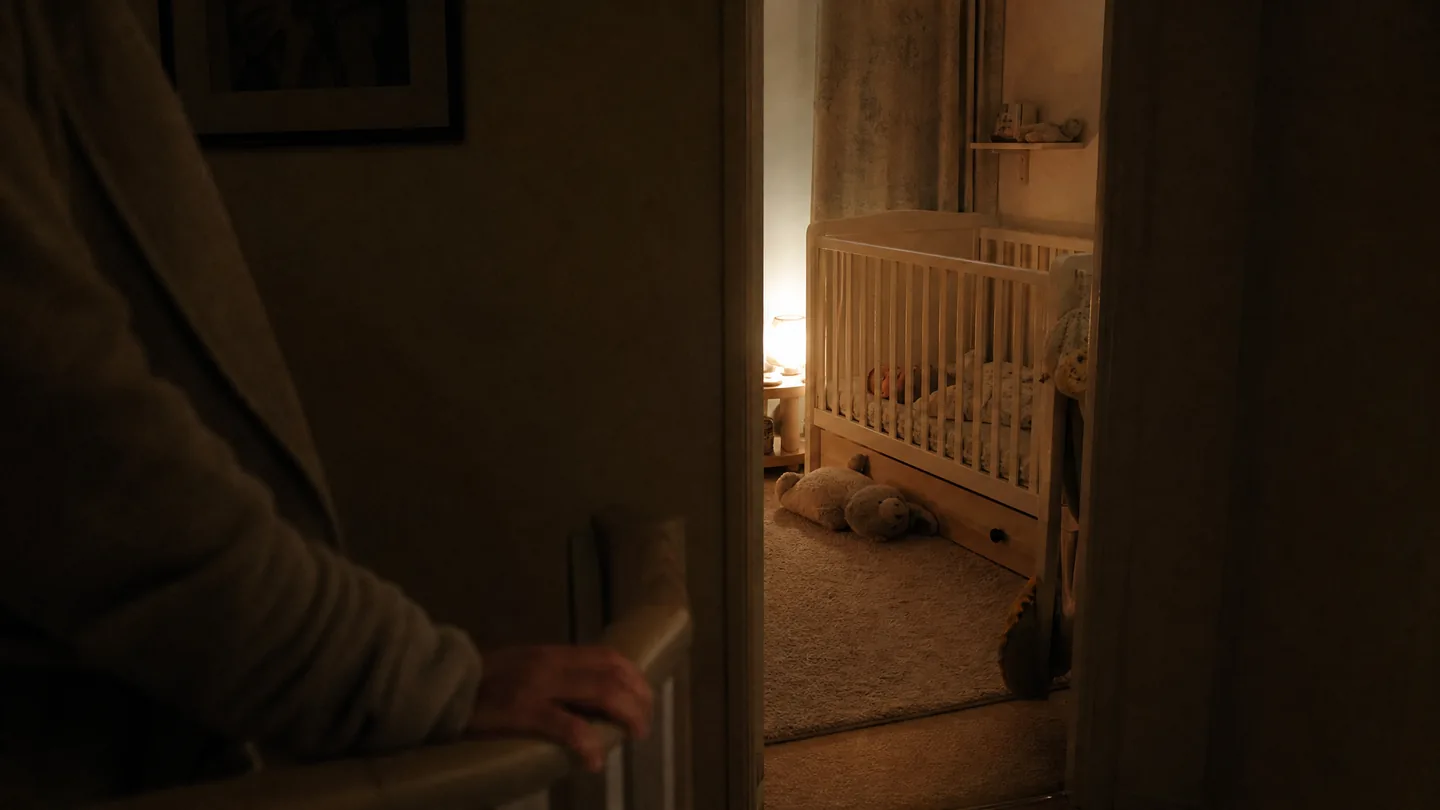
You are standing outside the door trying to work out whether this is fine. There are real differences between kinds of crying, they are audible, and your own tolerance is a legitimate part of the decision rather than a weakness in it.
4 min read
Not all crying means the same thing. A baby objecting to a change in routine is communicating something quite different from a baby in pain, and the two sound different once you know what to listen for.
This is worth knowing not so that you can ignore crying, but so that you can respond to it accurately. Going in for every sound wakes babies who were resettling. Not going in for genuine distress is a different mistake, and a worse one.
What the different cries sound like
Grumbling and complaint. Rising and falling, with pauses, often mixed with other noises. This is a baby working themselves towards sleep. Going in interrupts it.
Protest. Rhythmic, sustained, with breaks for breath, and it responds to your arrival. Uncomfortable to listen to and not distress.
Distress. Escalating rather than steady, breathless, panicky, not settling when you come in. This one needs a response and needs it now.
Pain. Sharp, sudden, high-pitched, often with drawn-up legs or arching, and it does not respond to the usual comfort. Stop what you are doing and check them properly.
The line
A workable rule: crying that is escalating rather than steady, that does not respond to your presence, or that has changed in character, means going in. Crying that is steady, rhythmic and settles when you appear can be given a little time.
And no approach should involve leaving a baby who is genuinely distressed. Whatever method you are using, distress is a stop signal rather than a stage to push through.
Your own limit is not a weakness in the plan. A method you cannot bear is a method that will not be finished.
Your tolerance matters
Some parents can listen to twenty minutes of protest calmly. Others find five minutes unbearable, and that is a real constraint, not a flaw to overcome. It frequently has to do with your own history, and it deserves respect rather than argument.
Build the plan around it. A method you can hold for four nights beats a faster one you abandon on night two - and abandoning halfway teaches your baby that persistence works, which is the outcome you least wanted.
If the two of you have different tolerances, the lower one should set the plan. Otherwise the household runs two methods and gets neither.
Agreeing a limit in advance
Decide in daylight what you will do and when. Something like: fifteen minutes of protest, checking every five, and then we pick them up. Written down, agreed by both adults, and treated as part of the plan rather than as giving in.
The value is that it stops the decision being made at the worst moment. A limit reached and honoured is a plan working. The same decision made at minute twenty-two, in a panic, feels like failure and teaches your baby that sustained crying eventually changes the outcome - which is precisely the lesson that makes the next night longer.
What to do about your own reaction
A baby crying produces a physiological response in a parent - heart rate, adrenaline, an urgent need to make it stop. That is designed and it does not switch off because you have decided the crying is protest rather than distress.
Practical things help more than resolve. Have the other parent do the settling on the nights you find it hardest. Keep a clock in view, because two minutes feels like fifteen. Go into another room if the sound is unbearable, provided someone is with the baby. And if the reaction is overwhelming in a way that feels disproportionate, that is worth mentioning to your GP rather than pushing through.
When to stop troubleshooting
Inconsolable crying, a cry that sounds like pain, a high-pitched or weak cry, crying with fever, vomiting, or a baby who cannot be comforted at all - stop and speak to your GP or call 111. A sudden change in the character of a baby’s cry is always worth taking seriously.
Want this worked out for your baby instead?
The quiz takes three minutes and asks about your nights, not just their age.
Take the 3-min quiz →General guidance, not medical advice. Your paediatrician's advice takes precedence.