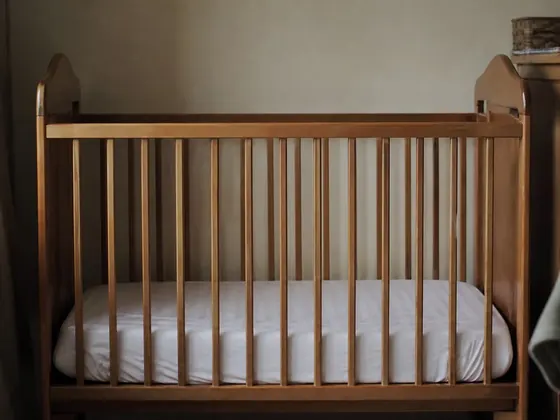
Room temperature and what to dress them in
You are worried they are cold, so you have added a layer. It is worth knowing that the risk runs the other way: overheating is associated with sudden infant death, and being slightly cool is not.
4 min read
Babies cannot regulate their temperature as well as adults, and they lose heat mainly through the head and face - which is why covering the head during sleep is specifically warned against. They also cannot remove a layer they do not need.
The recommended range is sixteen to twenty degrees. That feels cool to most adults, and it is correct. A room at twenty-four degrees with a baby in a winter-weight sleeping bag is the situation to avoid.
How to check
Feel the chest or the back of the neck. Skin there should feel comfortably warm. This is the reliable check.
Ignore hands and feet. They are almost always cool, in every baby, at every temperature. They tell you nothing.
Signs of overheating. Sweating, damp hair, flushed cheeks, a hot chest, breathing faster than usual, or a baby who seems restless and cannot settle.
Put a thermometer in the room. Guessing is unreliable, and rooms change a great deal overnight when heating goes off.
What TOG means
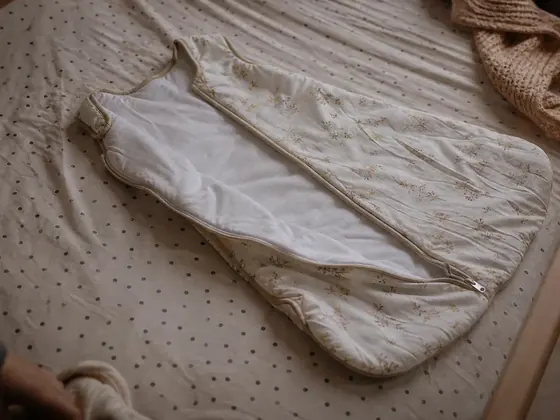
TOG is a measure of warmth, not thickness. Sleeping bags are usually sold in 0.5, 1.0 and 2.5. As a rough guide: 2.5 tog suits a room at about sixteen to twenty degrees, 1.0 tog suits roughly twenty to twenty-four, and 0.5 tog is for above twenty-four. Most bags carry a chart on the label, and it is worth reading the one on the bag you actually own.
Layers underneath count too. A vest and a sleepsuit under a 2.5 tog bag at nineteen degrees is about right; add a jumper and it is not. In a warm room, a short-sleeved vest inside a 0.5 tog bag, or just a nappy and a vest, is often enough.
Hands and feet are cold on every baby in every room. Feel the chest.
A few practical points
A sleeping bag is easier to get right than blankets, because it cannot be kicked off or pulled over the face. If you use blankets instead, they should be firmly tucked in no higher than the shoulders, and layers removed rather than added.
Never use a hat indoors for sleep. Do not put the cot next to a radiator, in direct sunlight, or against an outside wall that gets cold. And remember that a baby who was outside in a pram suit needs it removed once you are indoors, even if they are asleep - this is one of the most common overheating situations.
The situations that catch people out
Three recur. A pram suit or snowsuit left on after coming indoors, which is one of the most common overheating situations there is. Heating that clicks on at five in the morning and takes a room from eighteen degrees to twenty-three by six. And a warm spell in spring, when a 2.5 tog bag is still on the bed out of habit.
A thermometer in the room deals with all three, because none of them are noticeable otherwise. Check the reading when you go to bed rather than at bedtime - the room at ten at night is often several degrees different from the room at seven, and it is the later figure that matters for most of the night.
What to do in a heatwave
Rooms in older houses can sit well above twenty-four degrees for days at a time, and there is no sleeping bag light enough to fix a room that hot. Keep curtains and windows closed during the day and open them once the outside air is cooler than the inside. A fan can help provided it is not blowing directly onto your baby.
Dress down rather than trying to compensate - a nappy and a short-sleeved vest, or just a nappy, is appropriate above about twenty-six degrees. Offer extra milk feeds. And check them more often than usual, feeling the chest rather than the hands, because a hot room can heat a baby faster than an adult expects.
When to stop troubleshooting
A fever in a baby under three months needs same-day medical advice. Speak to your GP or call 111 about a baby who is hot and floppy, difficult to rouse, breathing fast, or who has a rash that does not fade when you press a glass against it.
Want this worked out for your baby instead?
The quiz takes three minutes and asks about your nights, not just their age.
Take the 3-min quiz →General guidance, not medical advice. Your paediatrician's advice takes precedence.