Swaddling: when to start, when to stop
Swaddling settles a lot of newborns, and it has one hard stopping point that matters more than anything else about it: the first sign your baby might roll.
3 min read
A swaddle works by containing the startle reflex, which in the first weeks jerks arms outward and wakes a baby who was drifting off. Wrapped firmly across the chest, that reflex stops interrupting sleep, and many newborns settle considerably better.
It becomes dangerous the moment rolling enters the picture. A swaddled baby who rolls onto their front cannot use their arms to lift or turn their head, and that is a serious risk. Because rolling can happen the first time without warning, the rule is not “stop when they roll” - it is stop at the first sign they might.
Doing it safely
Stop at the first signs of rolling. Rolling to the side, pushing up in tummy time, wriggling onto a shoulder. Usually somewhere between two and four months, sometimes earlier. There is no version of this rule with exceptions.
Always on the back. A swaddled baby is placed on their back for every sleep, without exception.
Loose at the hips. Legs must be able to bend up and out. Wrapping legs straight and tight is associated with hip dysplasia.
Firm across the chest, not tight. You should be able to fit two or three fingers between the swaddle and their chest. Their breathing should be unrestricted.
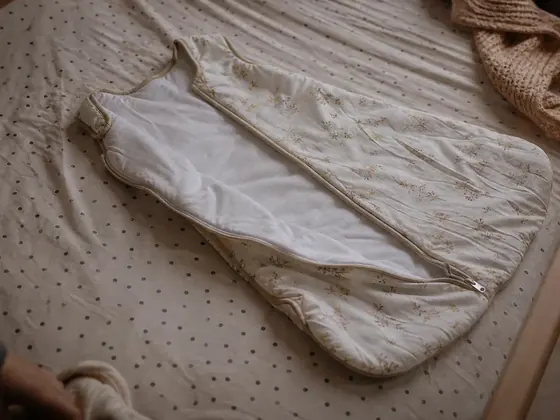
Nothing over the face, ever. And no loose fabric that could work its way up. A fitted swaddle bag is easier to get right than a blanket.
Watch the temperature. A swaddle is a layer. Adjust what is underneath accordingly and check the chest.
Weighted products
Weighted swaddles and weighted sleeping bags are marketed for sleep and are not recommended. Guidance from the American Academy of Pediatrics is explicit on this: nothing weighted should be placed on or around a sleeping baby.
The deadline is the first sign they might roll, not the first time they do. That distinction is the whole point.
What if they still need it?
Some babies clearly settle better swaddled right up to the point they start rolling, and stopping is disruptive. It still stops. What helps is transitioning gradually - one arm out for a few nights, then the other, then into a sleeping bag - starting before you have to rather than on the night you discover them halfway over.
Expect a week or two of worse sleep during the transition. It settles, and there is no way around it that is worth the risk.
When it stops helping anyway
The startle reflex fades naturally over the first months and has usually gone by around four to six. Plenty of babies stop benefiting from a swaddle before the rolling deadline arrives, and keeping it on past that point does nothing except add a layer of warmth.
Signs it has stopped earning its place: fighting to get arms out, sleeping no differently on the nights it slips loose, or waking more rather than less. If you see those, the transition is going to be easier than you feared, and there is no reason to wait for a deadline you are dreading.
Getting the wrap right
The two most common errors run in opposite directions. Too tight across the chest restricts breathing - you should be able to slide two or three fingers between the fabric and the chest. Too tight or too straight around the legs is associated with hip dysplasia; the legs must be free to bend up and out at the hips.
A fitted swaddle bag is easier to get right than a blanket and cannot come loose over the face, which is the third risk. Whatever you use, nothing should be able to work its way up, and the swaddled baby always goes down on their back.
When to stop troubleshooting
Speak to your health visitor or GP if your baby seems to have difficulty breathing when swaddled, if there is any concern about their hips, or if you have been advised differently for a specific medical reason.
Want this worked out for your baby instead?
The quiz takes three minutes and asks about your nights, not just their age.
Take the 3-min quiz →General guidance, not medical advice. Your paediatrician's advice takes precedence.