Weekends away and one-off late nights
You would like to go out for dinner, or to a wedding, or away for a weekend, without paying for it for a fortnight. You mostly can. It is worth knowing what a late night actually costs.
3 min read

One disrupted night is not a pattern, and babies are considerably more robust than the internet suggests. What creates lasting damage is not the late night - it is the week of compensating afterwards, which quietly moves everything.
So the plan is not to avoid late nights. It is to know what to do the following day, and to do it deliberately.
The price of one late night
A shorter night, not a later morning. Babies mostly wake at their usual time regardless. Assume a late night simply means less sleep.
A worse next day. Overtiredness shows up as shorter naps and a harder bedtime, which is where the second night gets lost.
Recovery in one to two days. Provided you go straight back to the normal schedule.
The trap: the compensating lie-in. Letting them sleep in and letting naps run long is what turns a one-night event into a shifted week.
The day after
Wake them at the usual time, or within half an hour of it. Get daylight early. Keep the naps at their usual times and cap them at their usual lengths. Then bring bedtime forward - sometimes by a full hour - and let the recovery happen in the direction of the normal schedule rather than away from it.
That is the whole method. The instinct to let them catch up is what costs the week.
The late night is cheap. The lie-in you allow afterwards is what you actually pay for.
For a weekend away
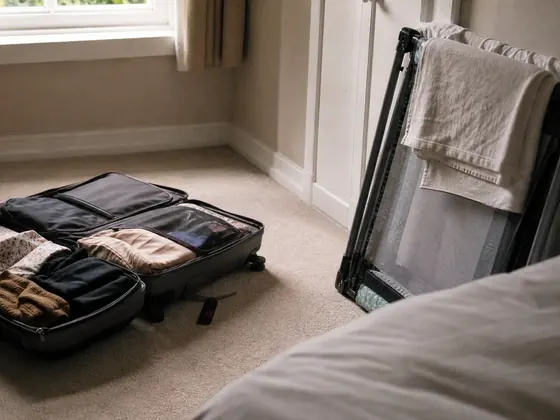
Bring the conditions - blackout, white noise, the same sheet, the same sleeping bag, the same routine. Protect bedtime and the first nap, and let everything else be whatever the weekend requires. Two nights of a strange room usually costs two or three nights at home afterwards.
And decide beforehand which things you are protecting, because deciding in the moment tends to protect none of them.
How often is too often
One late night a week is generally absorbable for most babies past six months, provided the following day is run normally. Two or three a week starts to accumulate into a permanent sleep debt, and the effect shows up as a baby who is harder to settle every evening rather than as a single bad night.
The other variable is age. Under about six months, a late night costs considerably more and recovers more slowly. Between six months and two years, the occasional evening out is genuinely low-cost. And if a single late night reliably costs you a week, that is a sign the schedule is already sitting too close to the edge and is worth looking at on its own.
What to protect and what to drop
Decide before you go, because deciding in the moment protects nothing. The two things worth keeping are bedtime and the bedtime sequence - same order, same words, wherever you are and whatever time it ends up being. Those hold most of the structure by themselves.
Naps can happen anywhere: pram, car, on somebody. The morning start can slip by half an hour. The evening can run late once. None of that costs much if the sequence stays intact and you go straight back to normal on the first day home rather than easing in over the following week.
When to stop troubleshooting
If a single late night regularly costs you a week, something else is fragile - usually the schedule sitting too close to the edge already. If sleep does not recover within a few days of returning to normal, look at wake windows rather than at the outing.
Want this worked out for your baby instead?
The quiz takes three minutes and asks about your nights, not just their age.
Take the 3-min quiz →General guidance, not medical advice. Your paediatrician's advice takes precedence.