Cot setup: what goes in, what stays out
A bare cot looks unwelcoming, and every instinct says to make it cosy. The reason not to is not strictness - it is that the things that make it look cosy are the things that cause harm.
3 min read
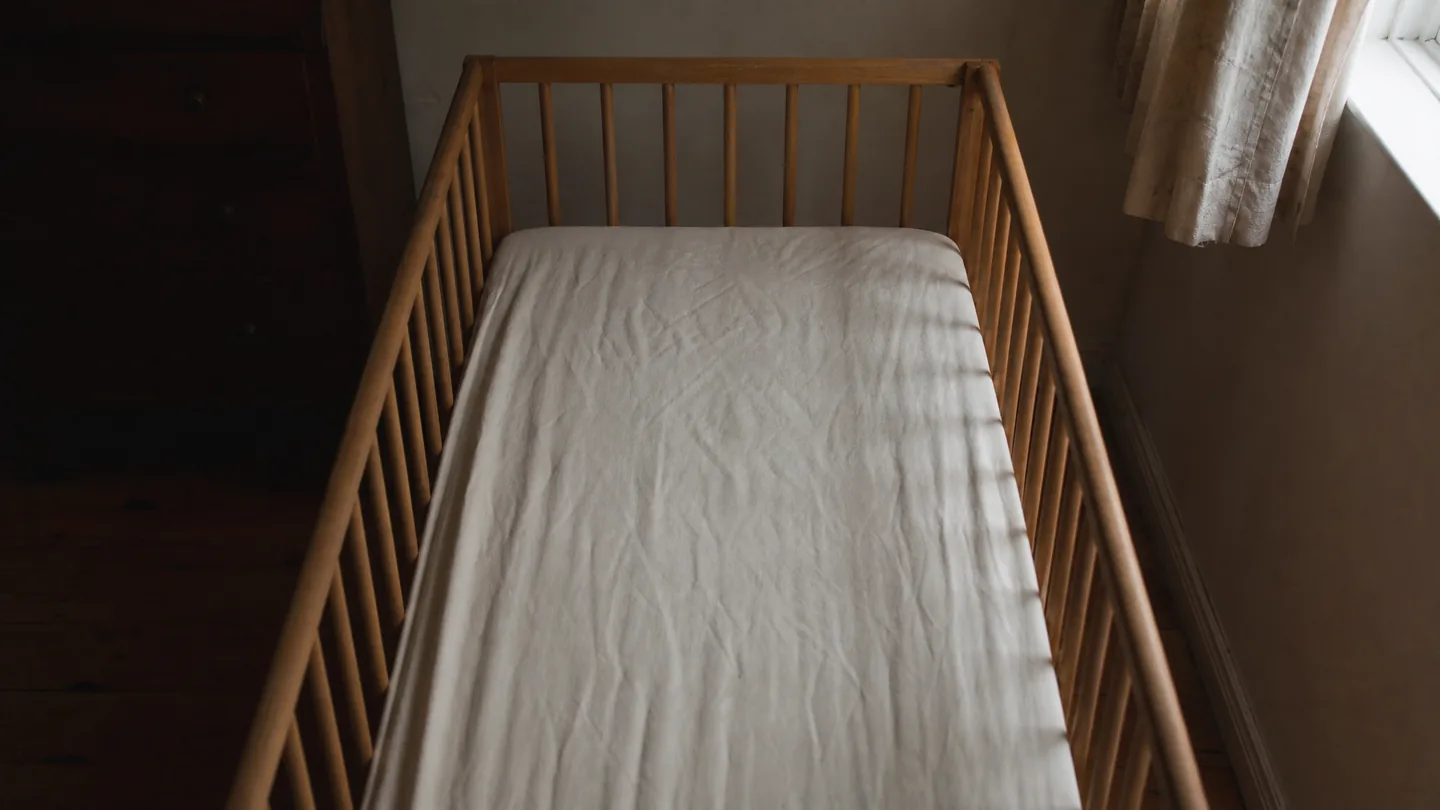
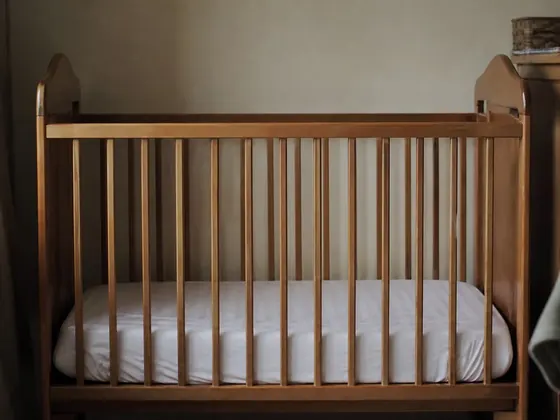
Soft objects and loose bedding in a sleep space are associated with suffocation, entrapment and sudden infant death. That is why guidance from the American Academy of Pediatrics and The Lullaby Trust is the same and is stated without qualification: for the first year, the cot contains a mattress, a fitted sheet, and the baby.
What goes in
A firm, flat mattress that fits. No gap larger than about two centimetres between the mattress and the cot sides. Firm enough that it does not indent when your baby lies on it.
A fitted sheet. Tight, correctly sized for that mattress, and nothing under it.
A sleeping bag, if you use one. Correctly sized so they cannot slip down inside it, with a neck opening that does not let the head through.
That is the complete list. Under twelve months, nothing else belongs in the cot.
What stays out
Pillows and duvets, of any size. Cot bumpers, including mesh and breathable ones - the evidence has not supported them and they present a strangulation risk from the ties. Soft toys and comforters under a year. Loose blankets. Sleep positioners, wedges, nests and pods. Anything weighted. And nothing should be hung on the cot or within reach of it: no cords, blind pulls, ribbons or dummy clips.
Second-hand mattresses are worth a mention. Where possible use a new mattress, and if you do reuse one, it must be firm, flat, in good condition, with a waterproof cover and no cracks or tears.
A mattress, a sheet, and the baby. Everything else that makes it look cosy is the part that causes harm.
After a year
From around twelve months, a small comforter or one soft toy becomes reasonable, and many children become attached to one. Keep it small, breathable, with no loose parts, ribbons or buttons.
Pillows and duvets are generally not recommended before around eighteen months to two years, and there is no benefit to introducing them earlier. A sleeping bag remains simpler and safer for as long as they fit one.
One more thing that changes with age: once your baby can pull to stand, the mattress goes to its lowest setting, and anything they could use to climb comes out.
Checking the mattress
Two checks, both quick. Press the mattress in the middle: it should feel firm and spring straight back, with no lasting dent. Then run your hand around the edges - a gap of more than about two centimetres between mattress and cot side is an entrapment risk and means the mattress is the wrong size for that cot.
Mattresses also age. Check for sagging, cracks in the waterproof cover, tears, or any smell of damp. Where possible use a new mattress for each baby, and if you are reusing one it should be firm, flat, clean, dry and in good condition, with an intact waterproof layer.
What changes with each stage
The cot needs revisiting three times. When they start rolling, the swaddle goes. When they start sitting and pulling up, the mattress drops to its lowest setting and anything climbable comes out - including anything that could be used as a step.
And when they are over twelve months, a small comforter becomes reasonable. Keep it small and breathable, with no ribbons or loose parts. Pillows and duvets can wait until eighteen months to two years, and there is no benefit to introducing either earlier - a sleeping bag is simpler and safer for as long as one fits.
When to stop troubleshooting
Ask your health visitor about anything you are unsure of, including advice you have been given that contradicts this. If your baby has a medical condition affecting breathing or positioning, the guidance may need adapting by your paediatric team rather than by you.
Want this worked out for your baby instead?
The quiz takes three minutes and asks about your nights, not just their age.
Take the 3-min quiz →General guidance, not medical advice. Your paediatrician's advice takes precedence.