Room sharing: how long, and why
The advice is to keep your baby in your room for at least six months. It is one of the better-evidenced pieces of safe sleep guidance, and it is also genuinely inconvenient - which is worth acknowledging rather than glossing over.
3 min read

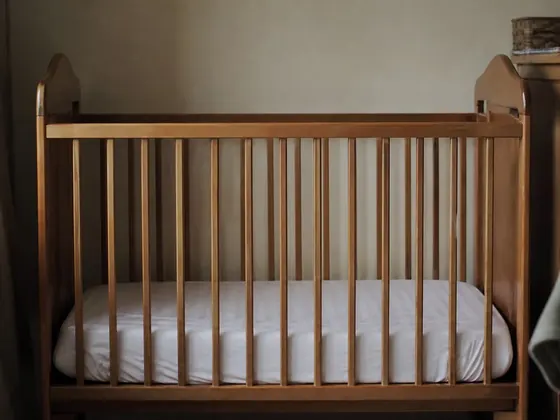
Room sharing means your baby sleeps in their own cot, crib or moses basket, in the room where you sleep. It is not bed sharing, and the distinction matters: sharing a room reduces the risk of sudden infant death substantially, while sharing a bed does not.
The Lullaby Trust advises the first six months, for day and night sleeps. The American Academy of Pediatrics advises at least six months and ideally the first year. The reason is not fully established, but proximity appears to matter - you notice more, and your baby’s sleep is somewhat lighter in your presence, which may itself be protective.
The practical difficulties
You wake for noises that are not wakes. Babies are loud sleepers. A great deal of parental sleep is lost to grunting that would have resolved on its own.
They may wake for you. Your movement, your snoring, your alarm. Both directions of this are real.
Bedtime gets complicated. If your baby goes down at seven and you go up at ten, the room has to be usable in between.
It affects the relationship. Nobody says this out loud in the guidance, and it is a real cost for many couples.
Making it workable
Position the cot so you cannot see directly into it from your pillow - much of the unnecessary waking is visual. Resist responding to every noise; ninety seconds of waiting resolves a surprising proportion of them. Use the landing or another room for the first part of the evening rather than sitting in the dark.
If you are genuinely not sleeping because of the arrangement, that is worth discussing with your health visitor rather than deciding alone. Chronic parental sleep deprivation carries its own risks, including the risk of falling asleep somewhere unsafe.
Room sharing, not bed sharing. The distinction is the entire recommendation.
After six months
Moving them to their own room after six months is consistent with guidance. Whether to do it then, or at nine months, or at a year, is a family decision rather than a safety one.
Pick a settled period rather than a disrupted one - not during a leap, teething, illness or the peak of separation anxiety around eight months.
The evening problem
The awkward part of room sharing is the three hours between your baby’s bedtime and yours, when the room is occupied and unusable. Sitting in the dark is one answer and it is a poor one over six months.
What works better is having somewhere else to be - the living room, the landing, another bedroom - and coming in quietly when you go to bed. Get everything you need out of the room first, so you are not opening drawers at eleven o’clock. And accept a few weeks of waking your baby by accident while you work out how to move around; it settles, on both sides.
Getting some sleep while you do it
Babies are extraordinarily noisy sleepers, and a great deal of parental sleep in the first six months is lost to grunting and shuffling that would have resolved on its own. Earplugs are an option worth considering - the kind that dull noise rather than block it, so a real cry still wakes you.
Position matters too: the cot out of your direct eyeline, so you do not wake and check every time you turn over. And resist the first-sound response. Ninety seconds of waiting resolves a surprising proportion of the noises, and going in converts a surfacing into a wake for both of you.
When to stop troubleshooting
Speak to your health visitor if you are so tired that you are falling asleep unintentionally, if the arrangement is affecting your mental health, or if you have been given advice that conflicts with this. Both of the first two are common and both have support available.
Want this worked out for your baby instead?
The quiz takes three minutes and asks about your nights, not just their age.
Take the 3-min quiz →General guidance, not medical advice. Your paediatrician's advice takes precedence.