Travel cots and unfamiliar rooms
You are going away and the sleep you spent months building is about to meet a strange room. The trick is not to make the room like home - it is to bring the parts of home that do the work.
4 min read
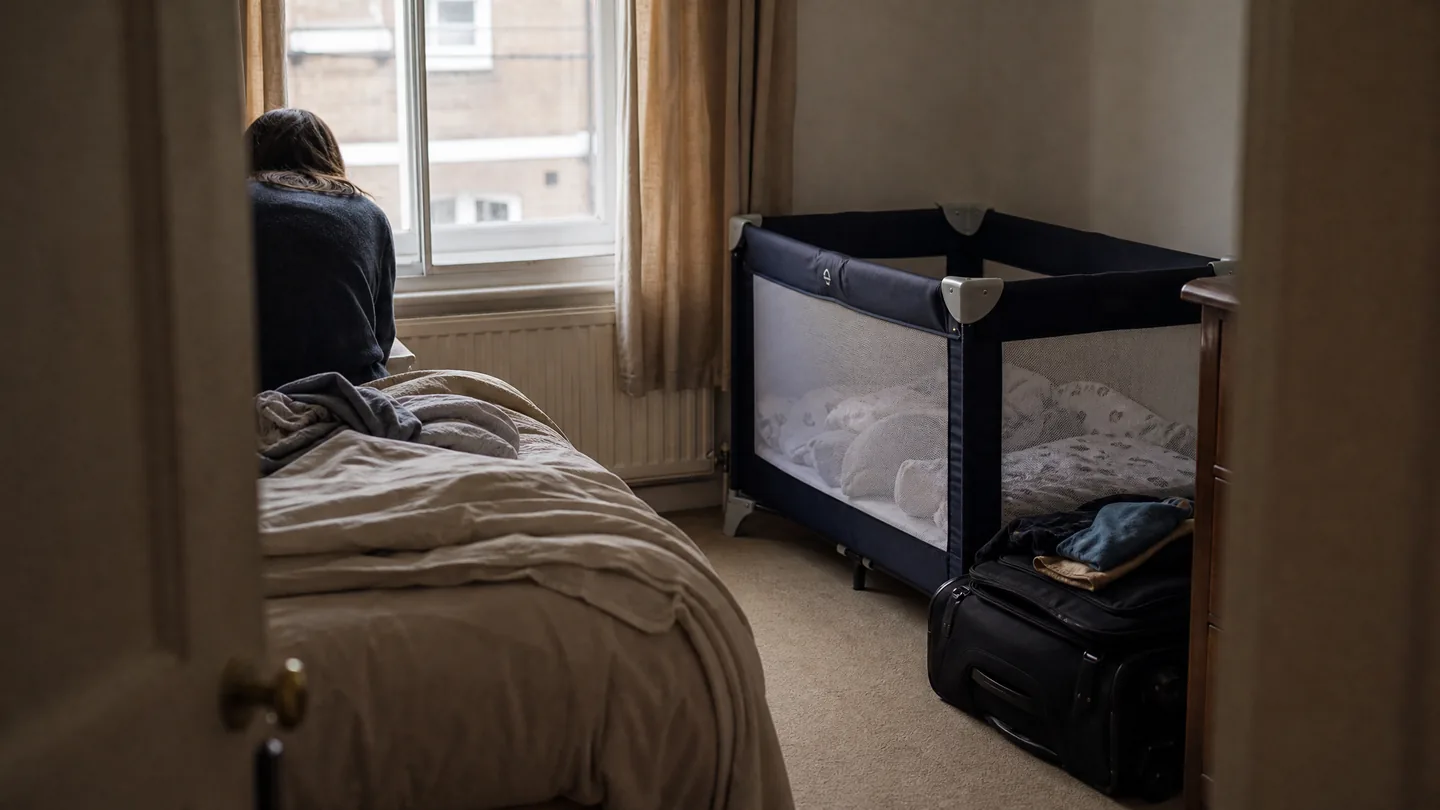
Babies take their cues from a small number of specific signals: darkness, sound, the feel of the bed, the sequence of the routine. Reproduce those and a strange room is much less strange than it looks to you.
The corollary is that the room’s appearance matters very little. A cot in the corner of an unfamiliar bedroom is fine, provided the four things below travel with you.
What to bring
Blackout. Portable blackout blinds with suckers, or bin bags and gaffer tape, which cost almost nothing and work better. This is the one that fails most often on holiday.
Your own sound. The same white noise, from a portable machine or a phone. At a safe level and away from the cot.
The unwashed sheet. From their own cot. Smell is a stronger cue than anything visual, and it costs no luggage space.
The same sleeping bag and the same routine. Identical order, identical words, even if the timing has to shift.
Travel cot safety
Use the mattress that came with the travel cot. It will feel thin and hard, and that is correct - travel cot mattresses are designed to be firm, and adding a second mattress, a folded duvet or a topper creates a suffocation and entrapment risk. Check the mattress fits the base with no gaps at the edges.
Everything else is the same as at home: on the back, nothing in the cot, room between sixteen and twenty degrees, and away from radiators, windows, blind cords and anything climbable.
Never add a mattress or a topper to a travel cot. Thin and firm is the design, not a shortcoming.
The first night, and coming home
Expect the first night to be poor and plan for it. Set the cot up before bedtime rather than while a tired baby watches, do the whole routine as usual, and accept that you may end up doing more settling than you have done for months. It normally improves by the second or third night.
Coming home usually takes two or three nights to reset, sometimes a week after a long trip or a time zone change. Go back to your normal routine immediately rather than easing back into it, and expect the schedule to be the last thing to recover.
Practising before you go
Set the travel cot up at home a week beforehand and use it for a few naps, and if you can, one night. The mattress feels quite different from a cot mattress, and discovering that on the first night of a holiday is worse than discovering it in your own spare room.
The same applies to any condition you plan to loosen. If your baby naps in blackout at home and the room where you are going will be brighter, practise with more light for a fortnight first. Two weeks of slightly worse naps at home is a much better trade than a week of no naps somewhere else.
Setting it up on arrival
Do it before bedtime rather than while a tired baby waits. Choose the position first - away from radiators, windows, blind cords, and anything they could reach through the mesh - then check that the mattress sits flat against the base with no gaps at the edges.
Put the blackout up in daylight when you can see what you are doing, and let your baby spend a little time in the room awake before the first night. Ten minutes of playing on the floor of an unfamiliar room does more for the first bedtime than anything you can do at seven o’clock.
When to stop troubleshooting
A baby who is unwell while travelling needs the same attention they would at home - and it is worth knowing before you go how to access medical care where you are going. Sleep that has not recovered a fortnight after returning is worth looking at as its own problem rather than as jet lag.
Want this worked out for your baby instead?
The quiz takes three minutes and asks about your nights, not just their age.
Take the 3-min quiz →General guidance, not medical advice. Your paediatrician's advice takes precedence.