White noise: useful, or a crutch?
White noise works, and the two things that decide whether it is safe are volume and distance. A lot of machines are used at levels that are not.
3 min read
Continuous low-level sound masks the household noises that fragment sleep - a door, a car, an older sibling, a floorboard. That masking is the whole benefit, and it is real: babies in noisy homes often sleep noticeably better with it.
The concern is hearing. Infant ears are more vulnerable than adult ones, and a machine placed on the cot rail at full volume can produce sound levels above what is considered safe for prolonged exposure.
Using it safely
Keep it around 50 decibels. Roughly the level of a quiet conversation or a running shower. If you have to raise your voice over it, it is too loud.
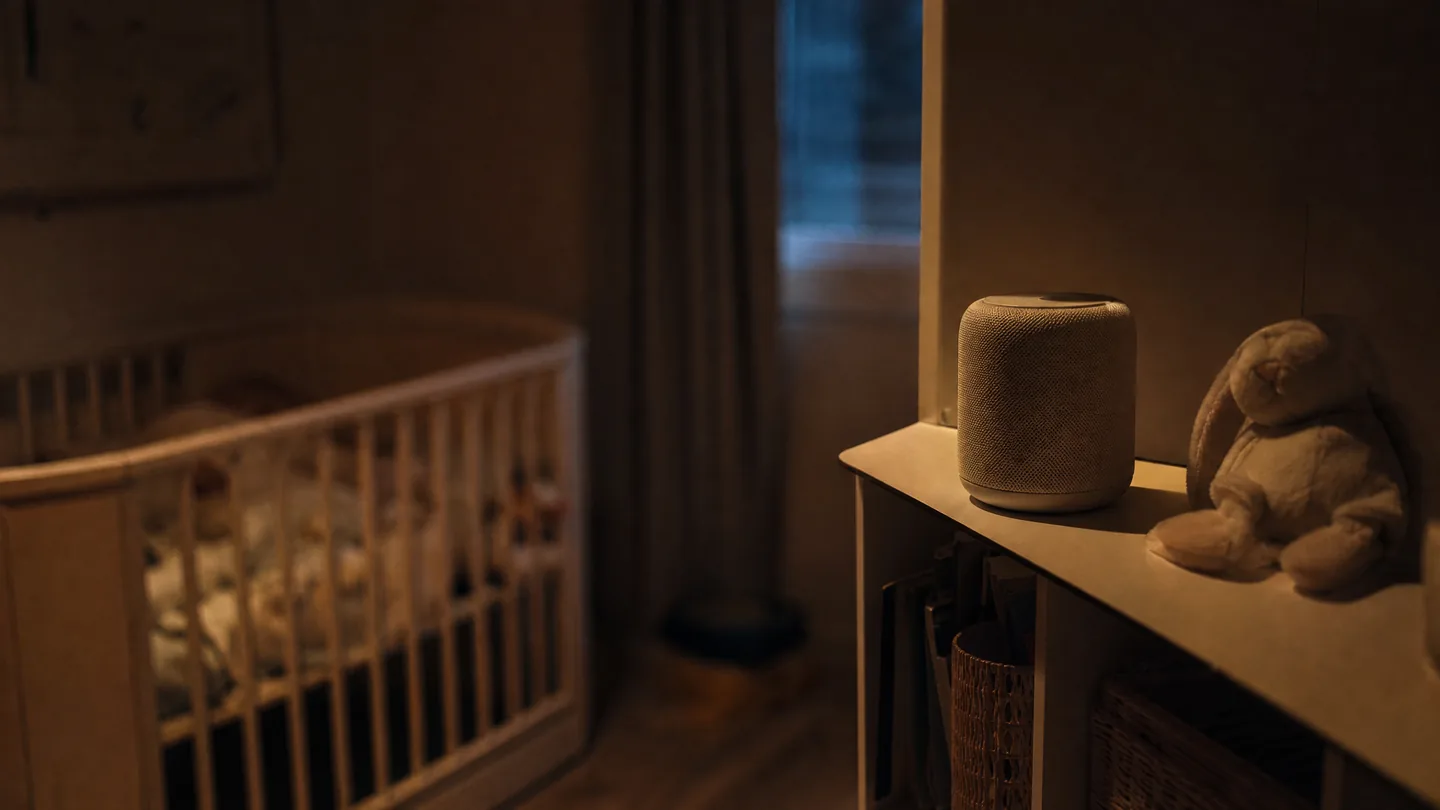
Place it well away from the cot. At least two metres, and never on or attached to the cot itself. Distance reduces exposure far more effectively than turning it down a little.
Use a phone app to check. A free sound level meter measured at the head end of the cot takes a minute and settles the question properly.
Continuous, not variable. Steady sound masks. Music, heartbeat tracks and anything with a pattern hold attention rather than covering noise.
Consider a timer. Running it only until they are asleep reduces exposure, though it does mean it is not masking noise later in the night. Either is defensible; leaving it loud all night is not.
Is it a crutch?
It is a sleep condition, like a dark room or a sleeping bag, and it has the same trade-off: it helps at home and has to be reproduced elsewhere. That is a practical consideration rather than a moral one.
If you use it, a portable version for travel and nursery solves most of the problem. Phones work in a pinch, though the volume is harder to control.
Two metres away and about as loud as a shower. Most of what goes wrong with white noise is distance, not volume.
Winding it down
There is no need to, but if you want to, reduce the volume slightly every few nights over two or three weeks rather than stopping. Most children stop needing it somewhere in the second or third year, and plenty of adults keep using it.
Choosing what to play
Steady and featureless is what masks noise. True white noise, pink noise, rain, a fan - anything continuous and unvarying works. What does not work is music, heartbeat tracks, lullabies or anything with a discernible pattern: the brain follows structure, and following is the opposite of what you want at the moment of falling asleep.
Avoid anything that fades out or changes volume automatically, since the change itself can wake a baby at a cycle boundary. And if you use a phone, put it on aeroplane mode and well away from the cot - a notification at 2am at masking volume is a rude way to end a nap.
Measuring it properly
A free sound level meter app takes a minute and settles the question. Measure at the head end of the cot, not next to the machine, and aim for around fifty decibels - roughly the level of a quiet conversation or a shower heard from the next room.
Most machines are used considerably louder than that, usually because they were placed close to the cot where they need less volume to be audible to an adult across the room. Moving it two metres away and turning it down is the fix, and it costs nothing.
When to stop troubleshooting
Speak to your health visitor or GP if you have any concern about your baby’s hearing, if they do not startle at loud sounds or turn towards voices, or if they failed or missed the newborn hearing screen.
Want this worked out for your baby instead?
The quiz takes three minutes and asks about your nights, not just their age.
Take the 3-min quiz →General guidance, not medical advice. Your paediatrician's advice takes precedence.